
Ever stood outside your own store and thought, no wonder nobody’s noticing it? Walk down any high street, phone in hand, and you’ll see exactly how it happens. People stroll past shopfronts that cost a fortune without looking up once. So how do you make LED signs that stop people in their tracks? It’s simple. Start with the site. Everything else, from pixel pitch to brightness, follows from where the screen lives and who needs to see it.
We’ve spent over 30 years putting big, bold ideas on buildings, shopfronts and stadiums, and our LED and illuminated signage projects run on the same Monster mindset. We don’t think small, and we don’t leave the details to chance. We plan every stage with you, from first survey to final switch-on. Here’s how an LED build comes together at Hollywood Monster, and what each technical decision means for the finished sign.
Start With the Site and the Audience
Where will the screen sit? Who will see it? How far away will they stand? What does the light look like at 9 am, at noon and after dark? These checks decide the budget and the programme long before a panel is ordered.
We also look at the structure the screen will hang from, the power supply, the cable routes and the access needed for installation and future maintenance.

BP Pulse Live shows why this stage matters. We were appointed to relaunch the NEC Birmingham arena under a bold new identity, with over 100 shows and 700,000 visitors a year to work around. The brief was clear: exterior impact, seamless interior branding and zero disruption to the live calendar.
LED was part of the answer. We integrated LED illumination across key exterior and interior elements and refurbished and illuminated the architectural tower ring. Over 3,000 man-hours later, the venue carries a glowing signature across the whole campus.
Survey the site, understand the footfall and plan the install around the people using the space. Everything else builds on that.

Choose the Right LED Format
Every environment calls for a different build; these are just some the formats we specify most often.
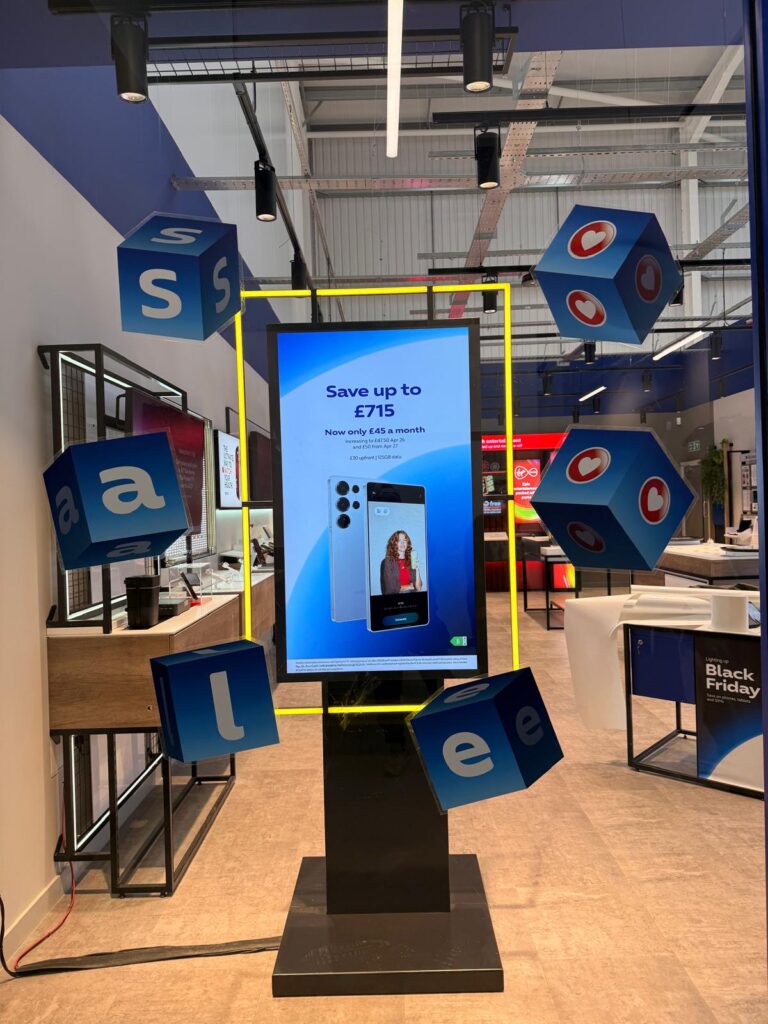
Shop LED signs
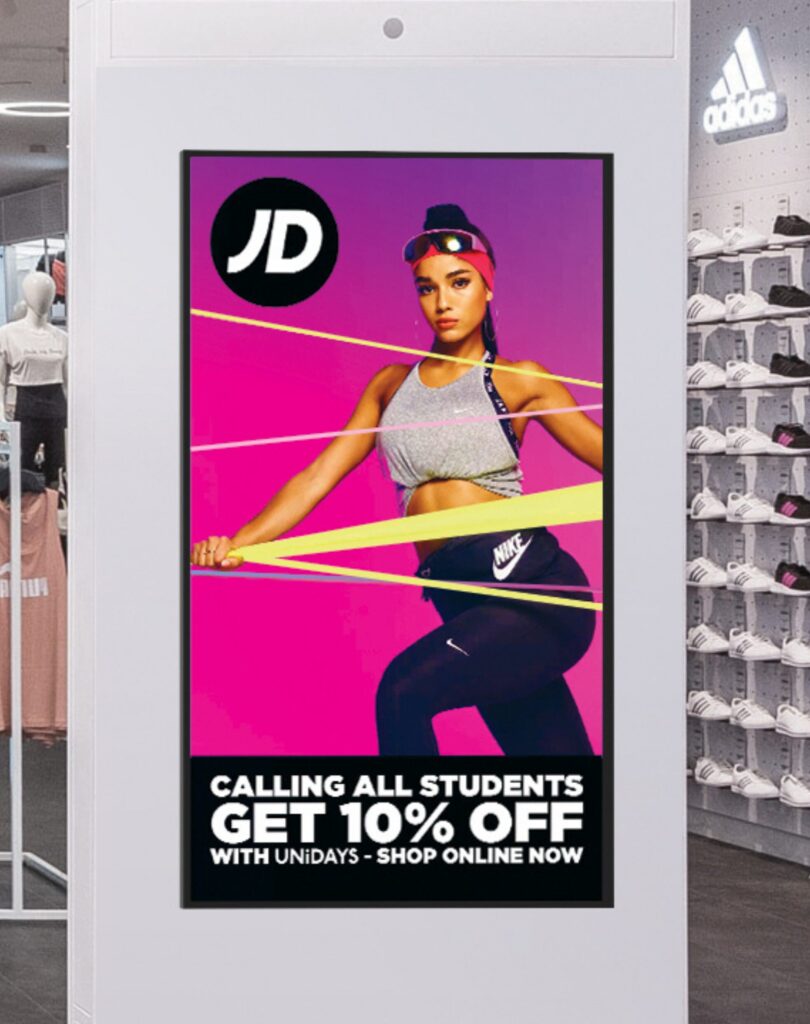
Retail screens work hardest at the window and the entrance. A window-facing screen competes with daylight and reflections, so it needs a higher brightness than a screen mounted inside the shop. Inside, we fit indoor screens for retail, office and education spaces on walls, in windows or suspended from the ceiling.
For slim portrait formats at a shopfront, till point or reception, digital posters give you a self-contained unit with a smaller footprint.
Wall LED display
A wall LED display is built from cabinets tiled to the required size. Cabinets commonly come as 500mm by 500mm or 500mm by 1,000mm modules, and that module size shapes the design. We size the screen to a whole number of cabinets early, which avoids cut-down edges and filler panels.
Service access matters too. Front-serviced cabinets suit walls with no rear access. Rear-serviced cabinets suit installs where there is space behind the wall for engineers.
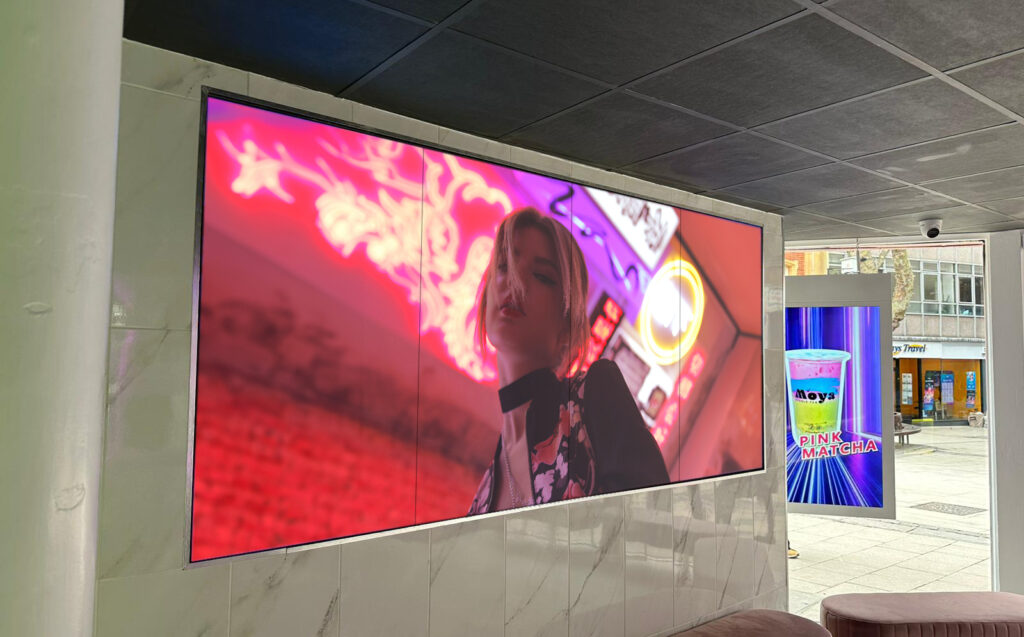
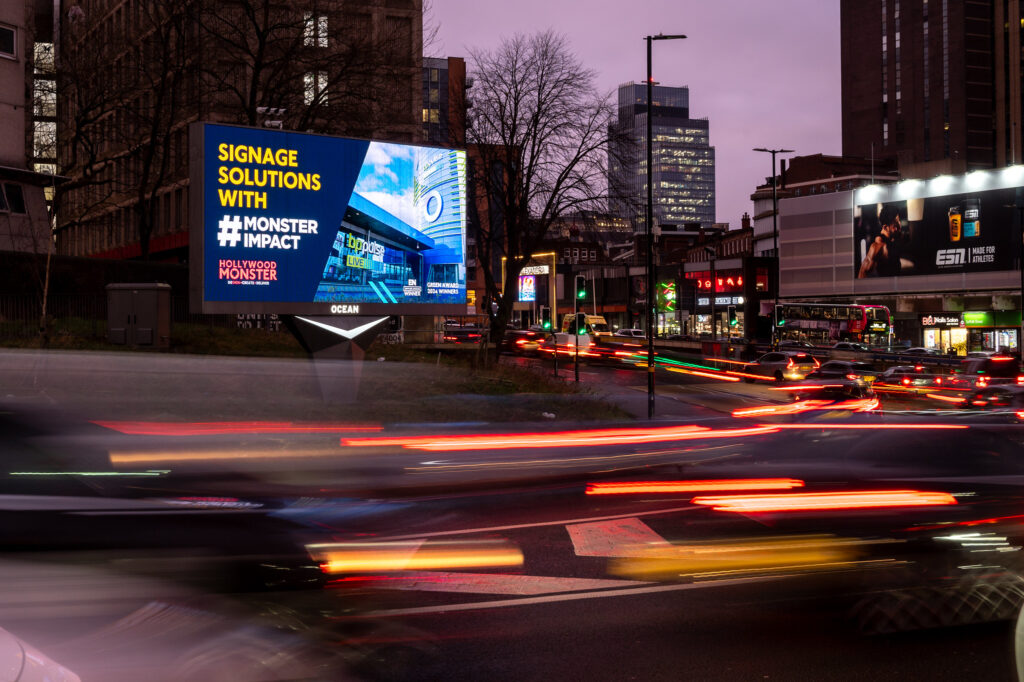
Outdoor signage LED
Exterior screens face heavy rain, so they need to be waterproof and visible; high winds, so they need to remain structurally sound; sun, so they need to stay bright in any condition; and a busy public rushing to their next destination, so your visuals need to grab attention fast.
Whether it’s a digital A-board that stands out on busy roadsides, or video walls built to dominate sightlines from streets away, we create outdoor LED signage that stands out.
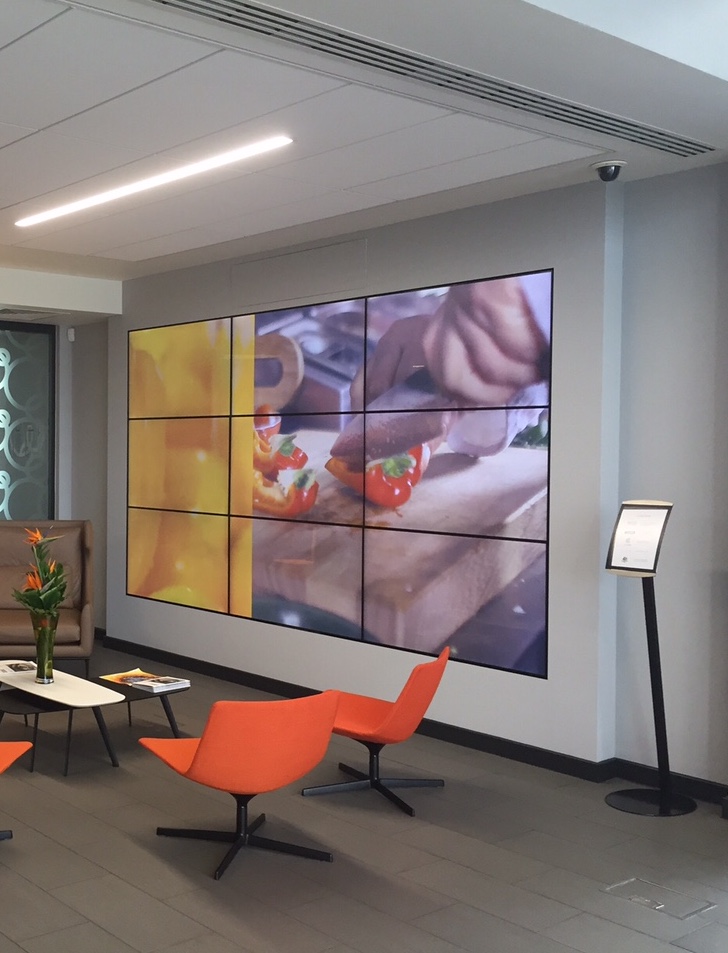
LED video wall panels
Tile enough LED video wall panels together and you get one big canvas for conferences, exhibitions and venues. A seamless video wall relies on a few components working together: the panels, a sending unit, receiving cards in the cabinets and a video processor that scales the content to the wall’s resolution.
Each LED video wall panel is then calibrated so brightness and colour match across the whole surface. Uneven panels show up as visible patches, so this step matters as much as the hardware.

Build the Screen Into the Signage
The best LED signs look like part of the building. We work with fabrication and finishing teams in-house, so we can integrate screens into traditional signage and fabrications rather than bolting a display onto a wall.
Every element needs purpose. Lighting decides how every illuminated sign reads, so we check brightness, viewing angles and reflections against the site before anything is built.
Get Pixel Pitch and Resolution Right
Pixel pitch is the distance, in millimetres, between the centres of neighbouring diodes. A smaller pitch packs more pixels into every square metre, which gives higher density and better definition. It also costs more.
A useful rule of thumb: the pitch in millimetres roughly matches the closest comfortable viewing distance in metres.
A 2.5mm pitch suits viewers from around 2.5 to 3 metres away. A 10mm pitch suits a screen seen from across a car park or a busy road. Specifying a finer pitch than the audience can see adds cost with no visible gain.
Pixel pitch also sets the screen’s resolution, and that sets the artwork. Take a screen 3 metres wide and 2 metres high at a 2.5mm pitch. That gives 1,200 pixels across and 800 pixels high.
Artwork built to those dimensions runs at native resolution and stays sharp. Artwork built at the wrong size gets scaled by the processor, and fine text suffers first.
Specify Brightness, Contrast and Refresh Rate
Brightness is measured in nits (candelas per square metre). Indoor screens typically run from a few hundred to a couple of thousand nits. Outdoor and window-facing screens need several thousand to hold their own against direct sun.
Too much brightness at night dazzles passers-by and can breach local planning limits. So we specify a brightness range and use ambient light sensors and dimming schedules so the screen adjusts through the day.
Refresh rate decides how stable the image looks on camera. A high refresh rate keeps the picture clean on phone footage and broadcast cameras, which matters for venues, events and retail screens that people photograph. Greyscale depth controls how smoothly the screen shows gradients and dark tones, so we check it against the type of content the client will run.
Plan Structure, Power and Cooling
LED cabinets are heavy, and a large wall makes resources add up quickly. We check the weight against the wall or frame, and for larger builds, the steelwork is specified to carry the load. A fixing that looks sound on paper can fail at the substrate, so we confirm what the wall is made of before drilling.
Power needs the same attention. We calculate the maximum draw for the full screen, plan dedicated circuits and distribution, and allow for surge protection. A screen showing bright white content draws far more power than one showing dark content, so the design works to the maximum.
Heat is the third constraint. LED cabinets generate heat in use. Screens recessed into walls or built into joinery need ventilation, or they will run hot and shorten their working life.

Weatherproof the Outdoor Builds
Outdoor LED signage lives or dies on its protection. Ingress protection (IP) ratings describe how well a cabinet resists dust and water, and exterior panels typically need a rating such as IP65 on the front face. We pair the cabinet rating with the right shroud, seals and drainage detail for the site.
Exposed structures add more variables. Wind loading affects freestanding and roof-mounted screens. Temperature swings cause expansion and condensation. Cable entry points need sealing. We plan for each of these before the screen leaves the workshop.
Planning is part of the job too. External illuminated and LED signs can require consent, and luminance limits vary by location. Before you commit to a design, check what signage planning permission covers with your local planning authority.
Control the Content
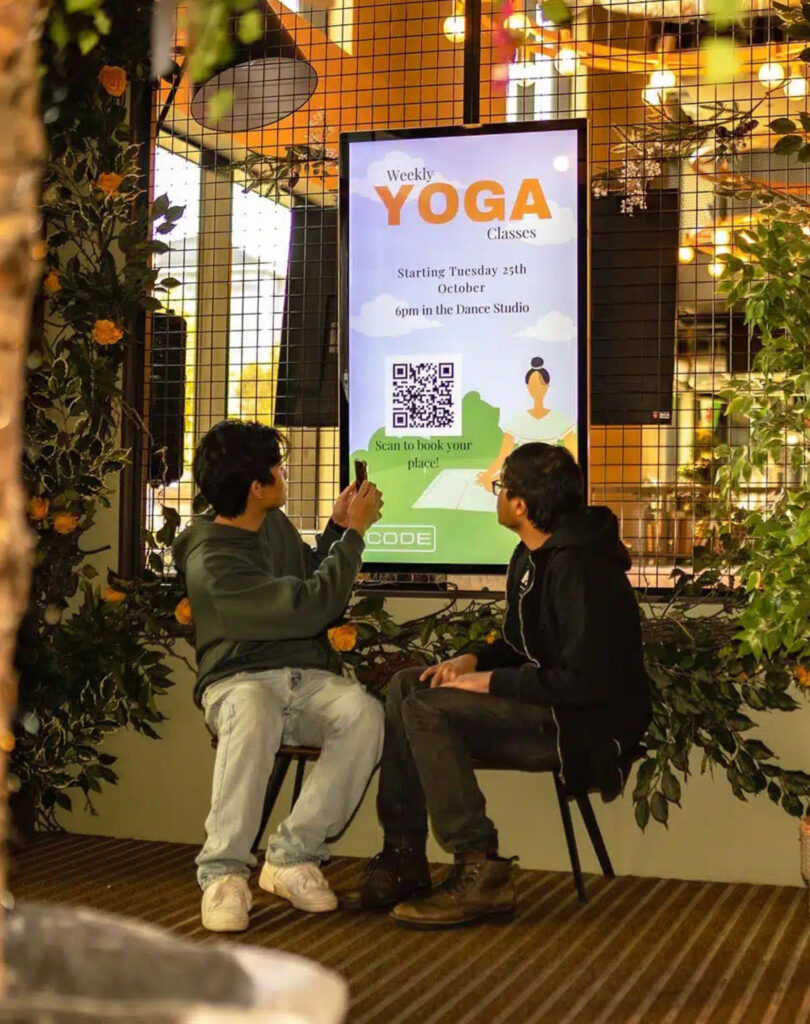
A good LED sign keeps working after installation day. Our online software lets clients change the message at the touch of a button, so artwork and offers update instantly with no reprint and no return visit. The control system, media player and content workflow behind the screen decide how digital signage works day to day, so we set them up around how the client’s team operates.
A few content rules keep the screen looking its best:
- Build artwork at the screen’s native pixel dimensions.
- Keep text large enough for the viewing distance, and keep messages short.
- Use high-contrast colour pairings, because thin fine detail disappears at a distance.
- Schedule content by time of day, so the right message plays at the right moment.


Proof It, Install It, Guarantee It
Everything we make is proofed before manufacture. We hold ISO 9001 and 14001 certifications, and our LED screens come with a five-year guarantee. If a client isn’t completely satisfied, we replace the product.
Installation follows full risk assessments and method statements, delivered by fully trained and certified engineers. Our project management team coordinates large multi-site installs across the UK and Europe, so every location lands on time.
Planning an LED Sign Project?
Whether it’s a single shopfront screen or a full venue rebrand, we’ll take it from survey to switch-on. Talk to our team about your next LED project.
Frequently Asked Questions
How do you make an LED sign?
Start with the site survey, then choose the LED format, pixel pitch and brightness to suit the viewing distance and environment. Plan the structure, power and cooling, build or specify the cabinets and any fabricated surround, then install, calibrate and load the content. Each stage depends on the one before, so skipping the survey causes problems later.
What pixel pitch do I need for a shop LED sign?
It depends on how close people stand. As a rule of thumb, the pitch in millimetres roughly matches the minimum viewing distance in metres. A window screen seen from the pavement often works well at a coarser pitch than a screen at a till point, where customers stand within a couple of metres.
How bright should an outdoor LED sign be?
Outdoor screens need several thousand nits to stay readable in direct sunlight. They should also dim automatically at dusk and overnight, which keeps the image comfortable and helps with local luminance limits.
Do LED signs need planning permission?
Indoor screens generally don’t. External LED and illuminated signs can need advertising consent, and screens in windows that face the street may come under the same rules. Check with your local planning authority early, because requirements and luminance limits vary.
How long do LED signs last?
LED modules are commonly rated for tens of thousands of hours, often quoted between 50,000 and 100,000. Real-world life depends on heat, brightness settings and the quality of the install. Our LED screens come with a five-year guarantee.
Can LED video wall panels be fitted to any wall?
Not every wall can take the weight. We check the substrate and the load, and we add steelwork or a supporting frame where it is needed. Rear or front service access also affects the choice of cabinet.
Can I update the content on my LED sign remotely?
Yes. Our online software lets you change the message at the touch of a button, from wherever you are.
What is the difference between an LED screen and an LED illuminated sign?
An LED screen shows changeable video and image content. An LED illuminated sign uses LEDs as a light source for fixed lettering and logos, such as halo-lit built-up letters. Many projects combine the two, with illuminated lettering and a screen sitting side by side.
NEWS


We’re Hiring a Digital Finisher: Where Print Becomes a Finished Graphic

