Most UK business signage falls under one of three routes: exempt, deemed consent, or express consent. Deemed consent covers standard fascia and projecting signs automatically, provided they stay within strict size, height, and illumination limits – but all signs must still meet five standard conditions (safe, tidy, owner’s permission, no obstruction, removable). Anything illuminated, oversized, digital/LED, or in a Conservation Area or on a Listed Building will almost certainly need Express Consent from the Local Planning Authority, a process that typically takes around 8 weeks and costs £132–£500 in fees. Ignore the rules and you risk enforcement notices and fines of up to £2,500 per sign, plus daily penalties. Hollywood Monster designs with compliance built in from the start, helping you avoid unnecessary applications where possible and navigate them smoothly where they’re required.
In the world of business, your signage is often your first impression. Whether it’s a towering building wrap in the heart of London or a sleek, halo-lit fascia sign for a new retail outlet in Birmingham, the right signage commands attention. At Hollywood Monster, we live for that #MonsterImpact.
However, before you can turn heads and dominate the skyline, there is one critical hurdle every business must clear: signage planning permission.
Navigating the UK’s planning laws can feel like a maze. Get it right, and your brand shines; get it wrong, and you could face hefty fines, enforcement notices, or be forced to take down your investment. This guide breaks down everything you need to know about signage planning permission in the UK to ensure your next project is both unmissable and fully compliant.

Do I Actually Need Planning Permission for My Sign?
In the UK, the control of outdoor advertisements is governed by the Town and Country Planning (Control of Advertisements) Regulations – while it’s commonly referred to as “planning permission,” the technical term is Advertisement Consent.
The short answer is: not always, but usually.

The regulations divide signage into three main categories:
- Exempt Advertisements: Signs that do not require any formal consent (e.g., signs inside a building or very small nameplates).
- Deemed Consent: Signs that are permitted automatically, provided they stay within specific limits regarding size, height, and illumination.
- Express Consent: Signs that require a formal application and approval from your Local Planning Authority (LPA).
Understanding ‘Deemed Consent’
Many standard business signs fall under “Deemed Consent.” This means you don’t need to wait for a council official to say “yes,” as long as you follow the rules. However, these rules are strict.

The Standard Conditions
Regardless of whether you need formal permission, all outdoor signs in the UK must meet five standard conditions:
- Clean and Tidy: The sign must be maintained in a good state of repair.
- Safe: It must not pose a danger to the public (e.g., securely fixed).
- Permission of the Owner: You must have the site owner’s consent (including the Highway Authority if it’s on public land).
- No Obstruction: It must not obscure official road, rail, or waterway signs.
- Removability: You must be able to remove the sign safely if required by the planning authority.
Size and Height Limits
For a shop or office fascia sign to qualify for deemed consent, it generally must:
- Not have any individual letter or symbol exceeding 0.75 metres in height (or 0.3 metres in Areas of Special Control).
- Not be higher than 4.6 metres above ground level.
- If it’s a projecting sign, it must not exceed 0.75 square metres in area.
When You Must Apply for Express Consent
If your vision is big, bold, and bespoke, you will likely need Express Consent. At Hollywood Monster, we specialise in large-format impact, which often falls into this category. You will almost certainly need to apply for permission if:
1. The Sign is Illuminated
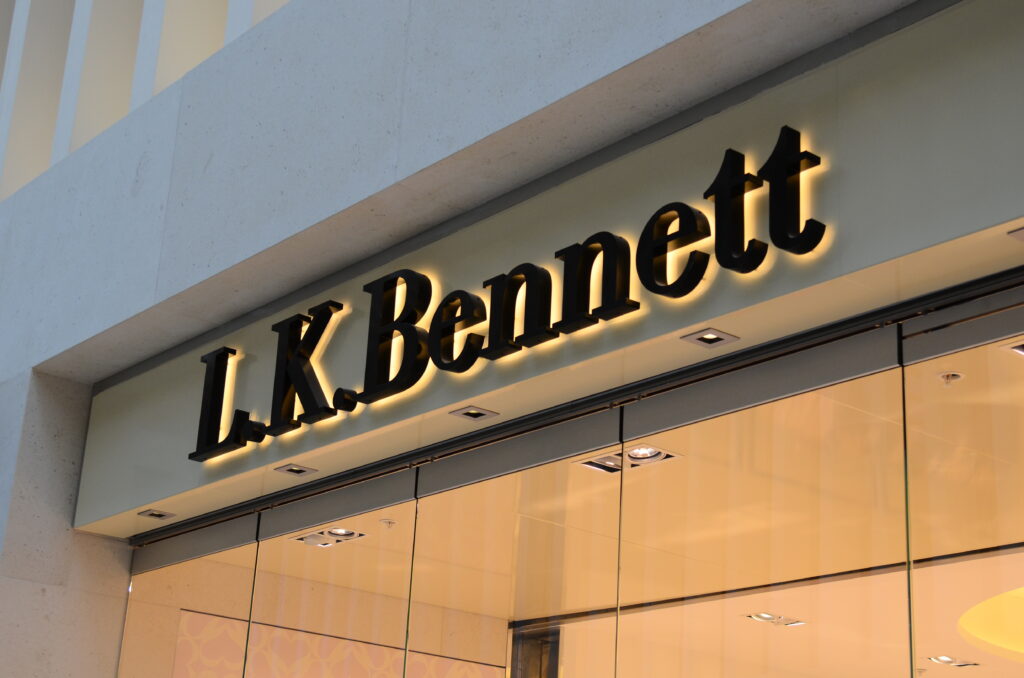
Most illuminated signs – whether they are internally lit lightboxes, neon, or halo-lit letters – require Express Consent. This is to ensure they don’t cause a light nuisance to neighbours or distract drivers.
2. Large-Scale Building Wraps and Hoardings
Thinking of a massive building wrap during a construction project? These are incredible for branding, but because of their scale, they always require formal approval from the local council.
3. Digital and LED Displays
Modern LED screens and digital billboards are subject to rigorous checks. Authorities look at how often the image changes and the brightness levels to ensure they aren’t a hazard to road safety.
4. Conservation Areas and Listed Buildings
If your business is lucky enough to be in a historic building or a designated Conservation Area, the rules are much tighter. Standard plastic signs are often rejected in favour of materials that respect the heritage of the area, such as timber or traditional metalwork.
The Risks of Ignoring the Rules
Cutting corners on signage planning permission is a risky strategy. Local authorities have the power to:
- Issue Enforcement Notices: Requiring you to remove or alter the sign within a set timeframe.
- Fines: Displaying an illegal advertisement is a criminal offence. Fines can reach £2,500 per sign, with additional daily penalties for as long as the sign remains up after a conviction.
- Reputational Damage: Nothing kills a brand’s #MonsterImpact faster than a “Removed by Order of the Council” notice.
Navigating the Application Process
Applying for Express Consent typically involves submitting an application to your local council via the Planning Portal. You will need:
- Site Plans: Showing where the sign will be located.
- Technical Drawings: Detailing the dimensions, materials, and colours.
- Illumination Details: Specifying the candelas per square metre (brightness).
- Application Fee: This varies depending on the type of sign, but usually sits between £132 and £500.
The process usually takes about 8 weeks. It is always worth speaking to a planning officer informally before submitting to see if they have any initial concerns.

How Hollywood Monster Helps You Navigate the Rules
We don’t just print and install; we provide a full-service solution. With over 30 years of experience in the UK signage industry, we understand the nuances of local planning departments.
1. Compliance-First Design
Our design team understands the limits of deemed consent. We can often tweak a design – adjusting the height by a few centimetres or changing the lighting method – to help you avoid the need for a lengthy application.
2. Sustainable Solutions
Many councils are now prioritising Green Planning – and as a leader in sustainable signage, we are deeply passionate about Green Planning across the UK. By using PVC-free materials and energy-efficient LED technology, we make your application more attractive to eco-conscious planning committees.
3. Engineering Excellence
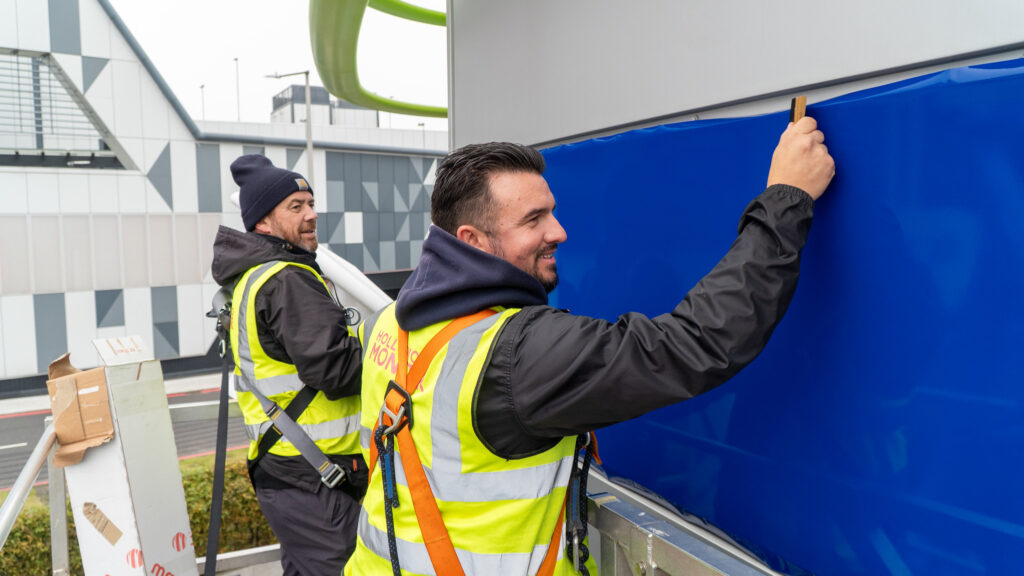
Safety is a core pillar of the UK planning rules. Our installation teams are experts in structural integrity, ensuring that your monster-sized signs are as safe as they are striking.
Summary Checklist for Signage Planning Permission
Before you hit “go” on your new signage, run through this quick checklist:
Check your location: Are you in a Conservation Area or a Listed Building?
Measure up: Does the sign exceed 4.6m in height or the standard size limits?
Check the light: Is it illuminated? If so, have you calculated the brightness?
Get permission: Do you have written consent from the landlord?
Consult the experts: Have you spoken to a professional signage partner?
Create a #MonsterImpact (Without the Drama)
Navigating signage planning permission doesn’t have to be a headache. By understanding the rules early and working with a partner who knows the landscape, you can ensure your brand stands out for all the right reasons.
At Hollywood Monster, we combine cutting-edge technology with decades of expertise to deliver signage that is bold, durable, and fully compliant. From initial concept to the final bolt, we’re with you every step of the way.
Don’t let red tape hold back your brand. Our team is ready to help you navigate the complexities of UK signage rules and deliver a solution that makes a real impact.
A note on this content: This article explains general principles of UK advertisement consent and signage planning rules as they stand as of March 2026, and is for information purposes only — it is not legal or planning advice. Planning requirements are determined by individual Local Planning Authorities and can vary by location, and rules around Conservation Areas, Listed Buildings, and illumination can be highly site-specific. If you’re planning a signage project, always confirm requirements directly with your Local Planning Authority or a qualified planning consultant before proceeding, and treat any figures or limits below as a general guide rather than a guarantee of compliance.
Three Recent Blogs


Building Advertising Wraps: Everything You Need to Know

