
Your window signs, dressing, and facade are an opportunity often overlooked. It’s much more than just a way for customers to look into your shop; it’s your chance at an unforgettable first impression. We should know. We’ve helped some well-known names make an impact with their glass frontages.
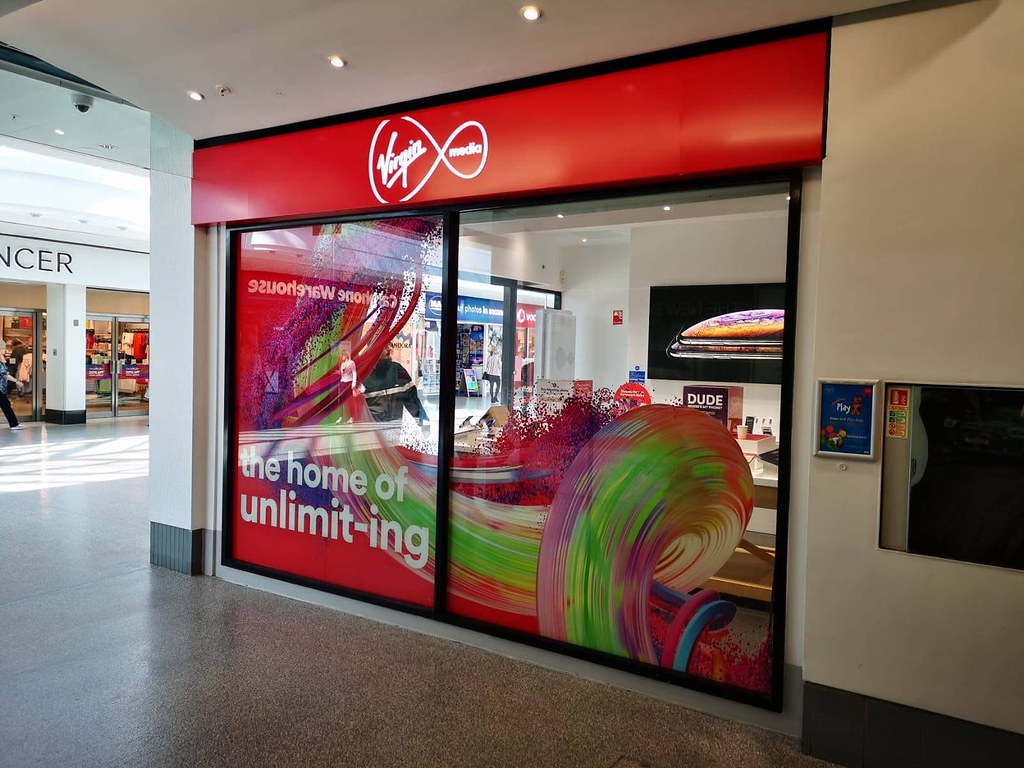
We worked with Westfield London to deliver more than 60 shopfront dressings as part of a major retail opening programme; we created illuminated window displays for JD Sports; we used window vinyl to bring Virgin Media campaigns into busy shopping environments; and we produced frosted window graphics for McDonald’s.
So, what’s the secret to dressing a shop window that actually makes people walk through your doors?
It’s about more than choosing an attractive graphic or filling every available inch of glass. You need to understand who’s looking, what you want them to see and how the display will work in its environment. The right combination of creative design, materials and positioning can turn an ordinary shopfront into one of your most effective brand touchpoints.
Whether you’re refreshing a high street storefront, planning a seasonal campaign or launching a new product, here’s how to make your window signs stand out.

Ready to Dress Unmissable Shop Window Displays
Talk to our team about creating a window sign that makes your brand stand out in busy environments.
Where Are Shop Window Displays Most Effective?
A high street retailer needs to catch the attention of passing pedestrians, while a shopping centre display might have to compete with dozens of other brands within the same space.
Understanding the environment is the first step towards getting the display right.
High Street Retail
On a busy high street, you’ve got seconds to make an impression. People are walking past, looking at their phones, heading to work or trying to get somewhere for lunch. Your window needs to give them a reason to double take.
Bold graphics, clear promotional messaging and strong imagery can help your shop stand out from the crowd. Think about what someone can understand while walking past. If they have to stop and study the display to work out what you’re offering, your messaging is too busy.
Consider the direction of footfall, the distance people will view the window from and whether your main message is visible from both sides of the street.
For a fashion retailer, this might mean using oversized campaign imagery alongside product displays. For a restaurant, it could be striking food photography, opening hours and a clear indication of what’s on the menu. The main focus should be making the important information clear, right from the start.

Shopping Centre Retail
Shopping centres bring a different set of challenges. There can be huge numbers of people passing through, but you’re also competing with neighbouring shopfronts, digital displays and other distractions.
Window graphics help retailers establish their brand identity, promote seasonal campaigns and make their shopfront recognisable within a much larger environment.
Our work at Westfield London is a good example of what’s possible. We delivered more than 60 shopfront dressings, including graphics for empty retail units that needed to look finished and consistent ahead of the centre’s opening.
When you’re dressing multiple windows within one destination, it’s important to think about the overall visual experience as well as each individual display.
Seasonal Displays and Product Launches
Christmas, Valentine’s Day, summer sales and new product launches all provide opportunities to refresh your shop window.
A seasonal display gives people something new to look at, while a product launch can help build anticipation before customers even enter the shop.
The key is planning ahead. If you’re changing graphics regularly, consider materials that can be removed or replaced without having to redo the entire window.
Removable window clings, interchangeable graphics and modular display elements can all help make campaign changes easier.
For larger campaigns, it’s also worth thinking about how the same creative concept will translate across different store sizes and locations.
How to Dress a Shop Window: 5 Things to Get Right
You don’t need an enormous budget or window displays full of elaborate props to create something effective. Some of the best displays come down to a few well-considered decisions.

1. Your Window Has Seconds to Make an Impression. Don’t Waste Them.
Before choosing colours, materials or graphics, decide what you want the window signs to say.
Are you promoting a particular product? Announcing a sale? Introducing a new collection? Or simply making sure people recognise your brand?
Trying to communicate everything at once usually results in a cluttered display that doesn’t communicate anything particularly well.
Start with one main message. Give it visual priority, then use supporting graphics or text to provide additional information.
A useful approach is to establish three levels of information:
- The hook: The main visual or headline that catches someone’s attention.
- The message: The promotion, product or idea you want them to understand.
- The detail: Supporting information such as dates, prices, website addresses or terms.
Think about how the display will look from a distance. A headline that looks perfectly readable when you’re standing next to the glass might be hard to make out from across the street.
2. Big Graphics. Small Windows. Make It Work.
Every window has different dimensions, proportions and practical limitations. The design needs to work with the space rather than simply being squeezed into it.
For smaller window signs, focus on a strong central visual and avoid overcrowding the glass. A few well-positioned graphics can often have more impact than covering every available surface.
Larger shopfronts give you more creative freedom. You can use oversized imagery, repeated graphic elements and different sections to tell a bigger visual story.
However, scale needs to be considered carefully.
Think about:
- Viewing distance: Will people see the display from a few metres away or from the other side of a shopping centre?
- Eye level: Are the most important graphics positioned where people naturally look?
- Glass divisions: Will window frames, doors or structural elements interrupt your design?
- Accessibility: Will graphics interfere with entrances, handles or important visibility areas?
It’s also worth considering whether the window needs to work from both sides. A graphic designed purely for external viewing might look very different from inside the shop.
Getting measurements and artwork specifications right before production helps avoid awkward joins, misplaced messaging and unnecessary waste.
3. Give People Something They Want to Look At.
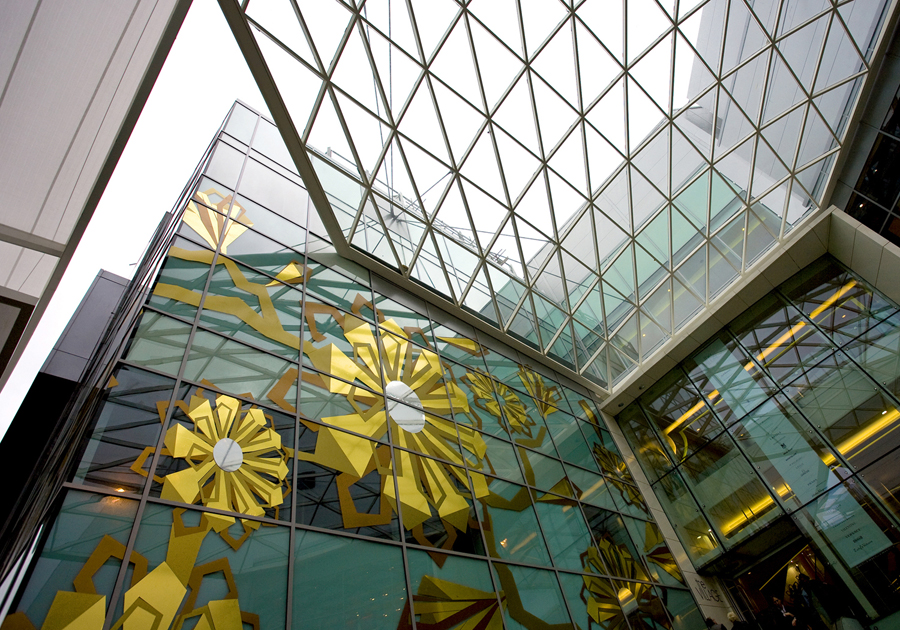
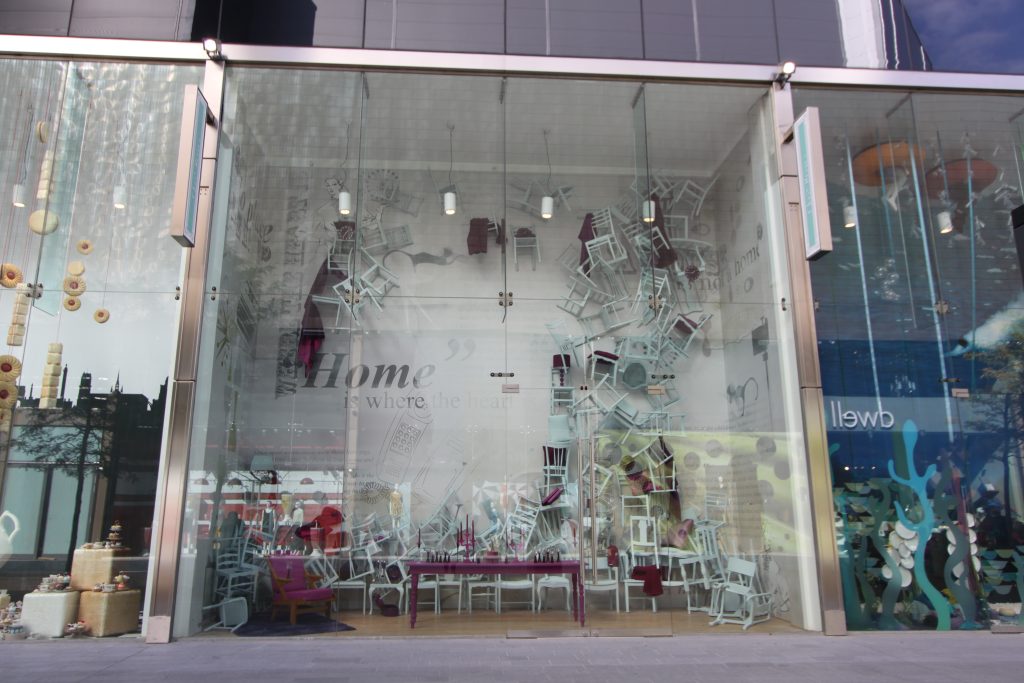
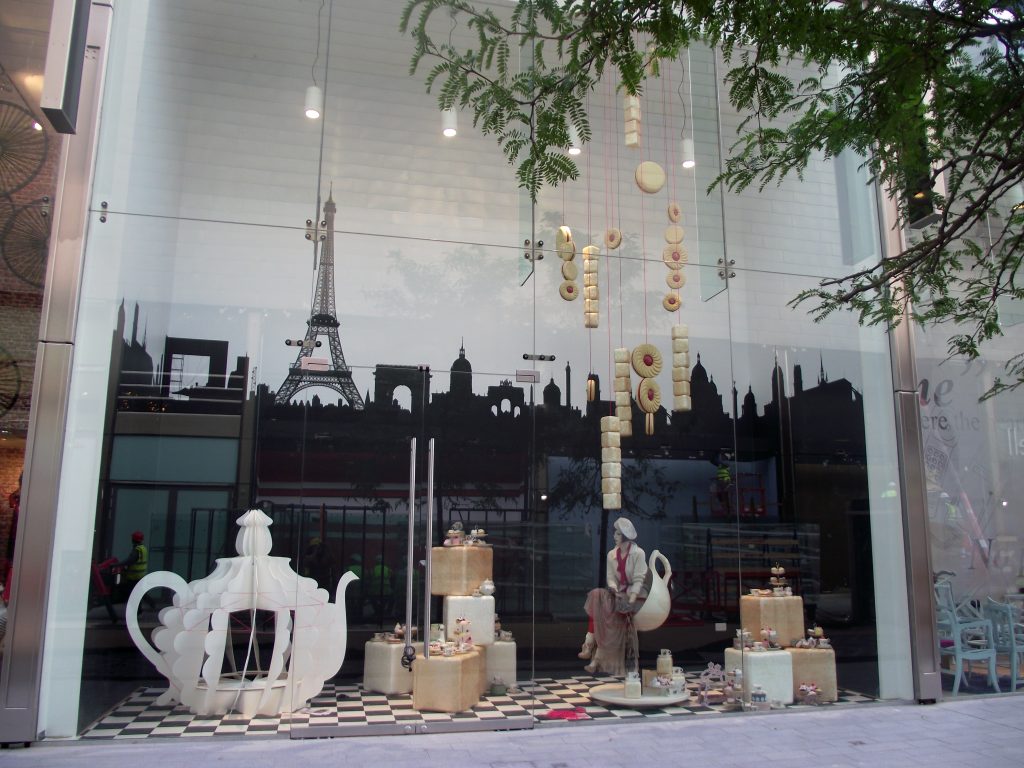
A window display doesn’t have to be a flat graphic. You can combine different visuals to create depth, movement and a more engaging experience. You might use printed graphics as a background, physical display structures to bring products forward and built-up lettering to make key messaging stand out.
Think about the relationship between the glass, the products inside and the space around them.
For example, a fashion retailer could combine large campaign imagery with mannequins and layered graphics, don’t add physical structures just because there’s room for them. Consider whether they improve the message, highlight a product or help guide the viewer’s attention.
This is where creative fabrication and modular display systems can make a difference, particularly when a brand wants something more distinctive than traditional window stickers.
4. Daylight, Darkness and Everything In Between
Your shop window signs don’t stop working when the sun goes down.
In fact, lighting can completely change how a display looks and how visible it is from outside.
Natural daylight, internal shop lighting, reflections and external illumination all affect how graphics appear on glass. A design that looks fantastic in bright daylight might become difficult to see once the shop lights are switched on.
Before committing to a design, consider how it will look at different times of day.
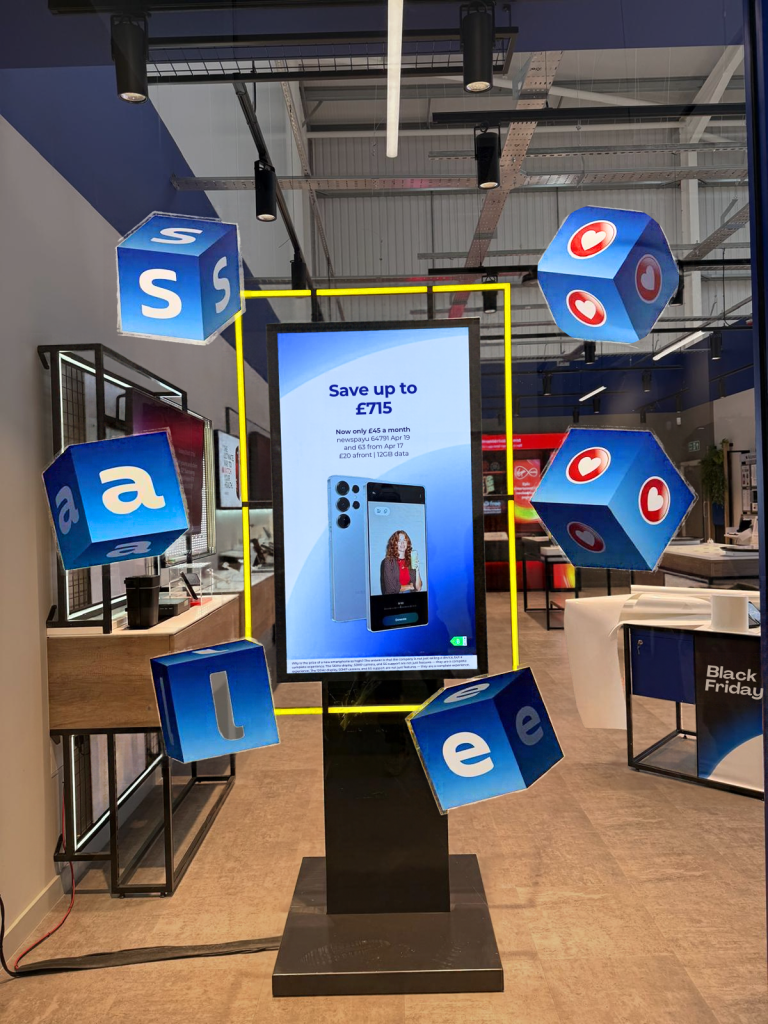
For illuminated displays, LED technology can provide another level of flexibility. Rather than relying entirely on static graphics, you can introduce moving visuals, rotating promotional messages and changing campaign content.
If you’re considering an illuminated display, think about brightness, viewing angles, reflections and the surrounding environment. The aim is to make your message visible, not create a distraction that overwhelms everything around it.
5. Keep Your Branding Consistent
Your shop window signs should feel like part of your brand, colours, typography, imagery and messaging should all work together. If your website, advertising and in-store experience have a recognisable visual identity, your window signs should continue that experience.
This becomes particularly important when you’re managing several stores. A national retailer might have different window dimensions, layouts and installation requirements at each location, but the overall campaign still needs to feel consistent.
Our work with Westfield London involved dressing more than 60 shopfronts while maintaining a consistent visual experience across the destination. It demonstrates why planning and production control matter just as much as the initial creative concept.
The Technical Stuff That Makes the Magic Happen
A great design is only half the job. The right materials, production methods and installation expertise are what bring it to life.
That’s why it’s important to work with someone from initial planning through to production, finishing and installation to find the right solution for each window, whether it’s printed vinyl, frosted film, LED displays or a more substantial built-up feature.
Planning and measuring
Consider window dimensions, glass divisions, sightlines, access requirements and the surrounding environment before production begins. For larger projects, site surveys help identify potential issues before they become expensive problems.
Safety and compliance need to be considered from the outset, too. Depending on the building, location and type of installation, there may be requirements around fire-retardant materials, fire safety ratings, electrical safety and landlord or site-specific installation guidelines. Understanding these requirements before production begins helps ensure the finished display is not only visually effective but suitable for its environment.
Choosing the right materials and finish
There are several ways to bring a shop window to life. Printed window vinyl is ideal for bold, full-colour campaign graphics applied directly to the glass. Frosted or etched-effect films offer a more subtle finish, providing privacy while allowing natural light through.
For something with more depth, built-up lettering and fabricated display elements can sit in front of the glass, creating a three-dimensional effect. LED technology can also be incorporated to illuminate features or introduce dynamic content that helps a display stand out after dark.
Colour and finish are important considerations, too.
Research published in 2025 found that colour saturation can influence how consumers perceive product effectiveness, highlighting the role visual presentation plays in shaping perceptions. Getting the colours, finishes and overall visual impact right helps ensure your window display represents your brand and communicates the right message.
Environmental factors also matter. Direct sunlight can cause graphics, printed colours and products behind the glass to fade over time, while glare and reflections can affect how clearly a display can be seen. Depending on the location and exposure, UV-protective films, suitable material finishes and careful positioning can help protect the display and maintain visibility.
Material choice matters too. PVC can be used for more substantial display elements, while alternatives such as Kavalan and UFabrik offer options for projects looking to reduce their reliance on traditional PVC materials.
We consider the required lifespan, visibility, light transmission and finish before recommending a material, so the solution works in practice as well as on screen.
Printing and finishing
Our Birmingham production facility houses specialist large-format printing technology, including the EFI VUTEk 5R, capable of printing up to five metres wide at speeds of up to 300 square metres per hour. Combined with our in-house cutting and finishing capabilities, this gives us the flexibility to produce bespoke graphics for a wide range of window sizes and applications.
Installation
Even the best graphics won’t look right if they’re installed badly. Accurate positioning, careful application and a clean finish are essential, particularly across large glass panels or multi-window displays.
Make Your Shop Window Impossible to Ignore
A well-dressed shop window does more than make a storefront look good. It gives people a reason to stop, communicates what your brand is about and can help turn passing interest into footfall.
The best results come from getting the details right from the start: understanding the space, choosing the right materials, making the design work at the right viewing distance and planning how everything will be produced and installed.
Whether you’re looking for striking window graphics, an illuminated display or a complete shopfront dressing, Hollywood Monster can help take your idea from initial concept through to production and installation.


Planning a shop window display?
Talk to our team about making your next window signage project stand out.
Frequently Asked Questions
How often should you update your shop window display?
It depends on your products, audience and campaign calendar. Seasonal retailers might update displays every few weeks, while permanent brand graphics can remain in place much longer. The important thing is keeping your messaging relevant.
What are the best window stickers for shops?
Printed vinyl is a versatile option for promotional graphics and branding. Removable window clings work well for temporary campaigns, while frosted vinyl is useful for privacy and decorative finishes. The best option depends on the desired appearance and how long the graphics need to remain in place.
Can shop window graphics be removed without damaging the glass?
Yes, provided the correct material has been selected. Removable window films and clings are designed for temporary use, although removal depends on the adhesive, installation conditions and length of time applied.
Can window signage be seen from inside and outside?
Yes, depending on the material. Transparent films allow visibility through the glass, while perforated window films can display graphics externally while retaining a degree of visibility from inside. Opaque materials, meanwhile, block visibility through the covered area.
Can you produce window signs for multiple shops?
Yes. Hollywood Monster has experience delivering large-scale retail projects, including more than 60 shopfront dressings at Westfield London. We can coordinate production and installation to help maintain consistency across multiple locations.
Can you create illuminated shop window displays?
Yes. LED window displays can incorporate moving visuals, changing promotional messages and dynamic branded content. They’re particularly useful when you want your display to remain visible after dark.
NEWS


We’re Hiring a Digital Finisher: Where Print Becomes a Finished Graphic

Bridging a Rivalry: Inside Our Stadium Signage for Villa and Blues

