Dave, before we get into Hollywood Monster, let’s talk about the journey. Thirty years is a long time in any industry. How did you end up in large-format print?
It wasn’t exactly a masterplan. I started on the shop floor, getting hands-on with the print process from day one. Back then, large-format was a very different world – the technology, the materials, the scale of what was possible. I was curious about how things worked, which meant I asked a lot of questions and probably drove a few people mad along the way. But that curiosity is what moved me through different roles – from printer to production manager, through to sales, account management, and eventually senior leadership and managing partner level. I’ve worked at independents and at international PLCs, which gives you a very different perspective on how businesses operate and what clients actually need from a print partner.
What I’ve always found is that the fundamentals don’t really change. Clients want work that looks right, arrives on time, and doesn’t cause them problems. Everything else is detail. The detail matters enormously, obviously – but that’s the core of it.
What brought you to Hollywood Monster specifically?
Honestly? The combination of things they’ve invested in. When you’ve been in this industry as long as I have, you get pretty good at spotting the difference between companies that talk about quality and companies that actually build for it. Hollywood Monster have done both. The equipment is world-class – the SwissQprint Kudu, the EFI M3h, the Hasler Magna 5-metre cutting system. You don’t make those kinds of commitments unless you’re serious about what you’re delivering.
And then there’s the team. Long-standing, experienced, genuinely invested in getting every detail right. You can have the best machines in the world, but if the people running them don’t care, it shows. Here, they do. That matters enormously when deadlines are tight and there’s no room for error.

Sustainability keeps coming up when people talk about Hollywood Monster. Is it something clients are actually asking about, or is it more of a box-ticking exercise at this point?
It’s absolutely something clients are asking about, and the gap between those who are serious about it and those who are just paying lip service is becoming very obvious. What I found refreshing here is that Hollywood Monster’s sustainability credentials aren’t just a slide in a presentation. They’re backed up by real numbers, real processes, and real investment.
We’re talking about recyclable materials, closed-loop waste systems, and a genuine commitment to reducing the carbon footprint on every project. That’s not accidental – it takes deliberate investment and ongoing effort to maintain. And it’s becoming increasingly non-negotiable for bigger brands and agencies who are under real pressure to demonstrate that their supply chain choices align with their own sustainability commitments.
Being able to point to a partner who takes that as seriously as they do the print quality is a genuine commercial advantage. I’ve seen businesses lose contracts not because their work wasn’t good enough, but because they couldn’t demonstrate credible environmental practice. That’s the reality of where procurement is heading, and Hollywood Monster are already there.
How has sustainability changed the way projects are actually planned and produced?
It’s changed the conversation at every stage. Historically, material choices were driven almost entirely by cost and performance. Now, sustainability sits alongside those considerations from the very start of a project. Which substrate? What’s the end-of-life plan for this material? Can it be recycled, returned, or repurposed? Those questions are coming from clients now, not just from us.
What I think Hollywood Monster do particularly well is making that process feel seamless rather than compromising. The sustainable option isn’t positioned as the lesser choice – it’s presented as the smart one, because increasingly it is. The technology has caught up. You don’t have to sacrifice quality or longevity to make responsible choices, and that message is landing well with clients who care about both outcomes.

You’ve worked across production, sales, and senior leadership. How does that breadth of experience shape the way you approach client relationships?
It means I can have a proper conversation at any level. If I’m talking to a brand manager, I understand the commercial pressures they’re facing. If I’m talking to a production team or a contractor on-site, I understand what they need to make their job work. I’ve been a printer, a production manager, a sales director, and a managing partner. I’ve sat on both sides of most conversations in this industry.
What that gives you is empathy, I think. You stop selling and start solving. And when you genuinely understand how a project gets from brief to installation, you can spot the potential problems before they become expensive ones. That’s where real value gets added – not in the pitch, but in the planning. Anyone can promise a good outcome. Fewer people can map out exactly how you’re going to get there and what you’ll do if something changes along the way.
What does good client service actually look like in this industry? It’s a phrase that gets used a lot.
It does, and it can mean very little if it’s not backed up by specifics. For me, good service starts with honesty. Being clear about what’s achievable, what the timeline looks like, and where the risks are. Clients don’t always want to hear that something is complicated, but they absolutely need to know – because surprises on-site, when a crew is waiting, and a deadline is fixed, are the worst possible outcome for everyone.

Beyond that, it’s about taking ownership. When you’ve got a client managing a national rollout across hundreds of sites, they need one point of contact who understands the whole picture. Someone who knows the print, knows the installation, knows the logistics, and can make decisions. That’s what I’ve always tried to be for clients, and it’s the standard I’ll be holding myself to here.
Hollywood Monster operate across a huge range of sectors. Is that breadth of capability something you see as a real differentiator?
Without question. We can take a client from a single high-impact installation through to a 500-site national rollout, and everything in between. Out-of-home advertising, retail environments, exhibitions, construction hoardings, sports venues, live events – the range of what we cover is significant. And it’s not just print. It’s fabrication, precision cutting, specialist finishes, and nationwide installation. Having all of that under one roof in a 45,000 sq ft facility means we can manage complexity in a way that a lot of companies simply can’t.
Clients don’t have to juggle multiple suppliers or worry about who’s responsible when something doesn’t go to plan. We own the whole thing, from the initial survey through to the team on-site doing the install. That end-to-end accountability is genuinely rare, and it makes a significant difference when projects are complex or time-pressured.
You mentioned the Hasler Magna cutting system. For clients who aren’t familiar with it, why does it matter?
Scale creates its own challenges when it comes to precision. When you’re producing graphics that stretch five metres wide, or running thousands of panels for a national campaign, even the smallest inconsistency becomes visible. The Hasler Magna is one of only a handful of 5-metre conveyor cutters in the UK. What it gives us is the ability to work at genuinely industrial scale while maintaining millimetre accuracy, consistently, across every single panel.
For clients, that translates directly into cleaner joins, faster installations, and the confidence that everything will fit perfectly when it arrives on-site. It’s not the most glamorous thing to talk about, but precision at the cutting stage is what determines whether a job looks brilliant or creates problems. And it has a real impact on service quality too – because when we get it right in production, it saves time and cost at installation. That’s a benefit clients feel directly.
What’s the most important thing you want clients to know as you step into this role?
That we’re here to make their projects work, whatever that looks like. Whether they need production only, a full turnkey solution, or finished graphics supplied for self-installation, we’ve got the capability and the experience to deliver it across every model.
I’ve spent thirty years building relationships in this industry based on actually doing what I said I would do. Hollywood Monster shares that ethos completely. The combination of technical investment, genuine sustainability credentials, and a team that genuinely cares about the outcome – it’s exactly what ambitious clients need right now. I’m very much looking forward to showing more partners what’s really possible here.
Let’s Talk
Dave Cowen is Hollywood Monster’s Commercial Manager, based at their 45,000 sq ft headquarters in Birmingham. To discuss an upcoming project, contact Dave at dave.cowen@hollywoodmonster.co.uk or call 07549 958727. Alternatively, contact us via the form.
READ MORE

Meet Dave Cowen: Thirty Years in Print and Still Asking the Right Questions
Skyline to Stage: The Ultimate Guide to Outdoor Festival Signage & Concert Branding
Hollywood Monster Strengthens Commercial Team with Industry Veteran Dave Cowen

In the UK’s legendary festival landscape, the environment is everything. Whether it’s a sprawling multi-stage greenfield event or an urban boutique concert, the atmosphere isn’t just created by the line-up: it’s built through visual immersion.
Outdoor festival signage is the silent architect of the guest and visitor experience. It’s the difference between a frustrated crowd lost in a field and a seamless, branded journey that starts the moment the first wristband is scanned. At Hollywood Monster, we don’t just print signs; we engineer the #MonsterImpact that turns a venue into a destination.
1. The Power of First Impressions: Entrance & Perimeter Branding
The festival experience begins long before the first chord is struck. The perimeter is your largest blank canvas, and in the UK’s competitive summer season, you need to own the sightline.
Building Wraps & Scaffolding Wraps
If your event is in an urban setting or features large temporary structures, building wraps are your secret weapon. They turn unsightly construction or functional silos into massive promotional powerhouses. Using wind-permeable mesh, you can wrap entire structures to provide a backdrop that is visible from miles away.
High-Impact Hoarding & Barrier Banners
Hoarding isn’t just for security; it’s for storytelling. Use high-quality vinyl graphics and rigid hoarding panels to build anticipation along the entry queues. This is prime real estate for “Coming Soon” teasers, social media handles, and sponsor recognition.
-
Pro Tip: Use specialist print finishes like metallic or neon inks on your entrance banners to ensure they pop even under low-light British summer evenings.
2. Navigating the Chaos: Wayfinding & Flow
A lost festival-goer is a distracted consumer. Effective festival signage must be intuitive. In a field of 50,000 people, your wayfinding signs need to be clear, elevated, and indestructible.
Wayfinding Signs & Totems
Directional signage should be cohesive. We recommend fabricated signage totems that sit above head height. These aren’t just boards on sticks; they are branded beacons. By using built-up letters or illuminated elements, you ensure that “The Pyramid Stage” or “Medical Tent” is visible even when the sun goes down.
Floor Graphics: The Ground-Up Strategy
Don’t neglect the space beneath your feet. Floor graphics are an underutilised tool for guiding crowds through high-traffic bottlenecks. Whether it’s slip-resistant vinyl on tarmac or heavy-duty branding on temporary flooring, these graphics provide subtle cues that keep the flow moving without cluttering the eye-level view.

3. The Main Stage: Large Format & Digital Excellence
The stage is the heart of the event. Here, the signage must be as loud as the sound system.
Large-Format Print & Backdrops
Concert signage at the main stage requires precision, and large-format print capabilities allow for massive stage backdrops that remain crisp under intense stage lighting and 4K cameras. Consider using tension fabric displays for a drum-tight, wrinkle-free finish that looks elite in every press photo.
LED & Digital Displays
In the modern festival era, static isn’t enough. LED and digital displays allow for real-time updates. Whether it’s changing set times, emergency announcements, or dynamic sponsor rotations, digital screens provide the flexibility that traditional print cannot.
4. Retail, Food, and Sponsorship: Driving Revenue
Festivals are commercial ecosystems. Your point of sale (POS) graphics and sponsor activations need to cut through the noise of the “Food Village.”
Point of Sale Graphics
Each vendor stall is a mini-brand. Consider bespoke vinyl graphics and banners that help vendors stand out while maintaining the overall festival aesthetic.
Sponsor Activations with Interior Fit-Outs
For VIP lounges and sponsor activations, the finer details are important. We provide full interior fit-outs, turning temporary marquees into premium environments. Using tension fabric displays and built-up letters, we create high-end brand “shrines” that feel permanent, even if they are only there for a weekend.

5. Safety First: The Essentials
In the UK, health and safety isn’t just a priority; it’s a legal requirement. But “safety” doesn’t have to mean “ugly.”
Health & Safety Signs
Fire exits, hydration stations, and first aid points must be unmistakably clear. Be sure to integrate health and safety signs into the festival’s visual language. By using consistent typography and colour coding, you can ensure safety information is absorbed instantly without breaking the immersive “vibe” of the event.
6. The Technical Edge: Why Material Choice Matters
The British weather is the greatest enemy of outdoor festival signage. From 30-degree heatwaves to sudden Atlantic squalls, your signage needs to be extremely durable.
Banners
Use heavy-duty, reinforced hems and eyelets.
Mesh
For high-altitude or wind-exposed areas, mesh allows air to flow through without compromising the vibrancy of the print.
Vinyl
Select specific adhesives based on the surface – whether it’s wood, metal, or plastic – ensuring no peeling mid-festival.
Summary Checklist for Festival Organisers
Review Safety
Are health & safety signs positioned at every critical junction?
Why Hollywood Monster?
Managing outdoor festival signage is a logistical jigsaw. You need a partner who can handle the “Monster” scale of the project from concept to de-rig.
We provide:
- In-House Production: We control the quality and the timeline.
- Site Surveys: We visit the site to ensure every sign is placed for maximum visibility.
- Expert Installation: Our teams work around the clock to ensure everything is ready before the gates open.
From digital advertising screens that capture the night to building wraps that define the skyline, we are the UK’s premier partner for concert signage.
Ready to make a #MonsterImpact?
Planning your next UK festival or outdoor concert? Don’t leave your visual identity to chance. Let’s talk about how our fabricated signage, LED displays, and large-format prints can transform your venue.
READ MORE
Meet Dave Cowen: Thirty Years in Print and Still Asking the Right Questions
Skyline to Stage: The Ultimate Guide to Outdoor Festival Signage & Concert Branding
Hollywood Monster Strengthens Commercial Team with Industry Veteran Dave Cowen
In the UK’s legendary festival landscape, the environment is everything. Whether it’s a sprawling multi-stage greenfield event or an urban boutique concert, the atmosphere isn’t just created by the line-up: it’s built through visual immersion.
Outdoor festival signage is the silent architect of the guest and visitor experience. It’s the difference between a frustrated crowd lost in a field and a seamless, branded journey that starts the moment the first wristband is scanned. At Hollywood Monster, we don’t just print signs; we engineer the #MonsterImpact that turns a venue into a destination.
1. The Power of First Impressions: Entrance & Perimeter Branding
The festival experience begins long before the first chord is struck. The perimeter is your largest blank canvas, and in the UK’s competitive summer season, you need to own the sightline.
Building Wraps & Scaffolding Wraps
If your event is in an urban setting or features large temporary structures, building wraps are your secret weapon. They turn unsightly construction or functional silos into massive promotional powerhouses. Using wind-permeable mesh, you can wrap entire structures to provide a backdrop that is visible from miles away.
High-Impact Hoarding & Barrier Banners
Hoarding isn’t just for security; it’s for storytelling. Use high-quality vinyl graphics and rigid hoarding panels to build anticipation along the entry queues. This is prime real estate for “Coming Soon” teasers, social media handles, and sponsor recognition.
-
Pro Tip: Use specialist print finishes like metallic or neon inks on your entrance banners to ensure they pop even under low-light British summer evenings.
2. Navigating the Chaos: Wayfinding & Flow
A lost festival-goer is a distracted consumer. Effective festival signage must be intuitive. In a field of 50,000 people, your wayfinding signs need to be clear, elevated, and indestructible.
Wayfinding Signs & Totems
Directional signage should be cohesive. We recommend fabricated signage totems that sit above head height. These aren’t just boards on sticks; they are branded beacons. By using built-up letters or illuminated elements, you ensure that “The Pyramid Stage” or “Medical Tent” is visible even when the sun goes down.
Floor Graphics: The Ground-Up Strategy
Don’t neglect the space beneath your feet. Floor graphics are an underutilised tool for guiding crowds through high-traffic bottlenecks. Whether it’s slip-resistant vinyl on tarmac or heavy-duty branding on temporary flooring, these graphics provide subtle cues that keep the flow moving without cluttering the eye-level view.
Let’s Talk
For enquiries about Hollywood Monster’s capabilities or to discuss upcoming projects, Dave Cowen can be reached at:
Phone: 07549 958727
Email: dave.cowen@hollywoodmonster.co.uk
Alternatively, get in touch with our team via the form to the right.
About Hollywood Monster
For over three decades, Hollywood Monster has been quietly rewriting the rulebook on what visual impact really means. Born from the coming together of two families and two businesses, our foundations were built on craft, care, and sheer determination. What started as a bold idea in Birmingham has grown into one of the UK’s most respected forces in visual communications – known for pushing boundaries, exceeding expectations, and delivering what others can’t.
Today, Hollywood Monster is trusted by long-standing trade partners as well as some of the UK’s biggest brands, fastest-growing companies, and most ambitious creative teams. We’ve evolved far beyond being “just a printer.” Our work spans large-format print, vinyl graphics, LED and digital displays, and specialist finishes – all delivered with one unshakable promise: #MonsterImpact.
We’re committed to doing it responsibly. From pioneering recyclable materials and closed-loop waste systems to constantly reducing the carbon footprint of every project, sustainability sits at the heart of everything we make.
Our solutions support brands and businesses across retail, leisure, live events, property, corporate and commercial fit-out – creating bold, high-performing signage and branded environments designed to last.
Hollywood Monster Solutions include:
A decade is a long time in any industry, but in large-format print, where deadlines are relentless and the pressure’s constant, it says something when someone not only stays but genuinely looks forward to turning up each day.
Kyle joined Hollywood Monster in January 2016. He’d already been in the industry for six years and came in through print finishing, but it was a conversation with a friend that really attracted Kyle in the first place. Hearing all the good that his friend had to say, how he spoke highly of the team and the way things got done, Kyle – in his own words – nagged his way into an introduction.
Turns out his friend was right.
“I’ve never not looked forward to work,” Kyle says. “That’s not something everyone can say after ten years. We work together at Hollywood Monster, really work together. It’s a team that just gets on with it, pushes through when it’s tough, and holds itself to high standards. That makes all the difference.”
From Print Finishing to Leading the Line
Kyle started in print finishing but moved into wide format print, an area that Hollywood has lead the way in for many years, an area where he’s now Lead Print Operator. Over the years, he’s worked on some serious kit: four years on the Vutek 5R (one of the first in the UK), six years on the Vutek Q5r, running detailed, precision projects on machines that demands both precision and attention.
It’s not just about operating the equipment. Wide format print at Hollywood Monster’s scale requires a particular mindset. You’re dealing with long runs, exacting detail, and materials that need handling with care. One lapse in concentration and you’ve got waste, delays, or worse: something that doesn’t meet the standard when it reaches the client.
Kyle’s suited to it. Methodical, determined, unfazed by pressure. He works closely with long-standing team members who’ve been here even longer, and together they’ve built a rhythm that keeps production flowing smoothly even when things get complicated.
“The nature of our work suits me,” he explains. “It’s both practical and creative, it needs focus, and there’s no room for cutting corners. But that’s what I enjoy about it: you know exactly what’s expected, and when you get it right, you can see the result. It’s genuinely satisfying.”
The Team That Makes It Work
Ask Kyle what’s kept him at Hollywood Monster for a decade and he’ll point to the people around him before anything else.
“We’re self-sufficient on the shop floor,” he says. “Everyone knows their role, everyone’s reliable, and we just get the job done. It’s laid-back in the right ways, there’s no unnecessary drama, but the standards are high. That combination keeps things running well.”
It’s that attitude, just getting on with it, that’s made Kyle such a pivotal part of the team. No fuss, no excuses, just consistent, high-quality work delivered day after day.
And it’s exactly the kind of approach Hollywood Monster was built on.
“Kyle’s been a rock,” says Simon McKenzie, Director at Hollywood Monster. “Ten years of turning up, delivering quality work, and being someone the whole team can rely on. That’s what builds a business. We’re lucky to have him, and we don’t take that for granted.”
Beyond the Shop Floor
Outside of work, Kyle’s a creative in his own right. With a degree in fine art and a diploma in graphics, and he still paints and illustrates whenever he can find the time. It’s a nice balance: precision and process during the day, creative freedom in the evenings.
These days, though, spare time looks a bit different, as a father to Kyran and Alaiya – between work and family, the painting might have to wait a little while longer. But that’s the thing about having something you’re genuinely passionate about: it’ll still be there when you’re ready.
A Proper Thank You
Ten years is no small thing. Kyle’s been part of Hollywood Monster’s growth, seen the company evolve, worked on projects that have tested the team’s capabilities, and consistently delivered work that meets our exacting standards.
From everyone at Hollywood Monster: thank you Kyle. For the reliability, the dedication, the attitude, and for being someone the rest of the team can count on, every single day.
Here’s to the next ten.
READ MORE
Meet Dave Cowen: Thirty Years in Print and Still Asking the Right Questions
Skyline to Stage: The Ultimate Guide to Outdoor Festival Signage & Concert Branding
Hollywood Monster Strengthens Commercial Team with Industry Veteran Dave Cowen
In the UK’s legendary festival landscape, the environment is everything. Whether it’s a sprawling multi-stage greenfield event or an urban boutique concert, the atmosphere isn’t just created by the line-up: it’s built through visual immersion.
Outdoor festival signage is the silent architect of the guest and visitor experience. It’s the difference between a frustrated crowd lost in a field and a seamless, branded journey that starts the moment the first wristband is scanned. At Hollywood Monster, we don’t just print signs; we engineer the #MonsterImpact that turns a venue into a destination.
1. The Power of First Impressions: Entrance & Perimeter Branding
The festival experience begins long before the first chord is struck. The perimeter is your largest blank canvas, and in the UK’s competitive summer season, you need to own the sightline.
Building Wraps & Scaffolding Wraps
If your event is in an urban setting or features large temporary structures, building wraps are your secret weapon. They turn unsightly construction or functional silos into massive promotional powerhouses. Using wind-permeable mesh, you can wrap entire structures to provide a backdrop that is visible from miles away.
High-Impact Hoarding & Barrier Banners
Hoarding isn’t just for security; it’s for storytelling. Use high-quality vinyl graphics and rigid hoarding panels to build anticipation along the entry queues. This is prime real estate for “Coming Soon” teasers, social media handles, and sponsor recognition.
-
Pro Tip: Use specialist print finishes like metallic or neon inks on your entrance banners to ensure they pop even under low-light British summer evenings.
2. Navigating the Chaos: Wayfinding & Flow
A lost festival-goer is a distracted consumer. Effective festival signage must be intuitive. In a field of 50,000 people, your wayfinding signs need to be clear, elevated, and indestructible.
Wayfinding Signs & Totems
Directional signage should be cohesive. We recommend fabricated signage totems that sit above head height. These aren’t just boards on sticks; they are branded beacons. By using built-up letters or illuminated elements, you ensure that “The Pyramid Stage” or “Medical Tent” is visible even when the sun goes down.
Floor Graphics: The Ground-Up Strategy
Don’t neglect the space beneath your feet. Floor graphics are an underutilised tool for guiding crowds through high-traffic bottlenecks. Whether it’s slip-resistant vinyl on tarmac or heavy-duty branding on temporary flooring, these graphics provide subtle cues that keep the flow moving without cluttering the eye-level view.
About Hollywood Monster
For over three decades, Hollywood Monster has been quietly rewriting the rulebook on what visual impact really means. Born from the coming together of two families and two businesses, our foundations were built on craft, care, and sheer determination. What started as a bold idea in Birmingham has grown into one of the UK’s most respected forces in visual communications – known for pushing boundaries, exceeding expectations, and delivering what others can’t.
Today, Hollywood Monster is trusted by long-standing trade partners as well as some of the UK’s biggest brands, fastest-growing companies, and most ambitious creative teams. We’ve evolved far beyond being “just a printer.” Our work spans large-format print, vinyl graphics, LED and digital displays, and specialist finishes – all delivered with one unshakable promise: #MonsterImpact.
We’re committed to doing it responsibly. From pioneering recyclable materials and closed-loop waste systems to constantly reducing the carbon footprint of every project, sustainability sits at the heart of everything we make.
Our solutions support brands and businesses across retail, leisure, live events, property, corporate and commercial fit-out – creating bold, high-performing signage and branded environments designed to last.
Hollywood Monster Solutions include:
Looking Ahead to 2026
Curry King of Birmingham 2026 is set to be another standout moment for the city. A chance to celebrate the best of Birmingham while supporting causes that truly matter. We’re proud to play our part and to stand alongside LoveBrum, the restaurants involved, and the wider community in making it a success.
If you’re attending, competing, or simply cheering from the sidelines, know that your involvement makes a difference. Together, we’re not just crowning a curry champion. We’re championing Birmingham itself.
And that’s something we’ll always be proud to support.
READ MORE
Meet Dave Cowen: Thirty Years in Print and Still Asking the Right Questions
Skyline to Stage: The Ultimate Guide to Outdoor Festival Signage & Concert Branding
Hollywood Monster Strengthens Commercial Team with Industry Veteran Dave Cowen
In the UK’s legendary festival landscape, the environment is everything. Whether it’s a sprawling multi-stage greenfield event or an urban boutique concert, the atmosphere isn’t just created by the line-up: it’s built through visual immersion.
Outdoor festival signage is the silent architect of the guest and visitor experience. It’s the difference between a frustrated crowd lost in a field and a seamless, branded journey that starts the moment the first wristband is scanned. At Hollywood Monster, we don’t just print signs; we engineer the #MonsterImpact that turns a venue into a destination.
1. The Power of First Impressions: Entrance & Perimeter Branding
The festival experience begins long before the first chord is struck. The perimeter is your largest blank canvas, and in the UK’s competitive summer season, you need to own the sightline.
Building Wraps & Scaffolding Wraps
If your event is in an urban setting or features large temporary structures, building wraps are your secret weapon. They turn unsightly construction or functional silos into massive promotional powerhouses. Using wind-permeable mesh, you can wrap entire structures to provide a backdrop that is visible from miles away.
High-Impact Hoarding & Barrier Banners
Hoarding isn’t just for security; it’s for storytelling. Use high-quality vinyl graphics and rigid hoarding panels to build anticipation along the entry queues. This is prime real estate for “Coming Soon” teasers, social media handles, and sponsor recognition.
-
Pro Tip: Use specialist print finishes like metallic or neon inks on your entrance banners to ensure they pop even under low-light British summer evenings.
2. Navigating the Chaos: Wayfinding & Flow
A lost festival-goer is a distracted consumer. Effective festival signage must be intuitive. In a field of 50,000 people, your wayfinding signs need to be clear, elevated, and indestructible.
Wayfinding Signs & Totems
Directional signage should be cohesive. We recommend fabricated signage totems that sit above head height. These aren’t just boards on sticks; they are branded beacons. By using built-up letters or illuminated elements, you ensure that “The Pyramid Stage” or “Medical Tent” is visible even when the sun goes down.
Floor Graphics: The Ground-Up Strategy
Don’t neglect the space beneath your feet. Floor graphics are an underutilised tool for guiding crowds through high-traffic bottlenecks. Whether it’s slip-resistant vinyl on tarmac or heavy-duty branding on temporary flooring, these graphics provide subtle cues that keep the flow moving without cluttering the eye-level view.
3. The Main Stage: Large Format & Digital Excellence
The stage is the heart of the event. Here, the signage must be as loud as the sound system.
Large-Format Print & Backdrops
Concert signage at the main stage requires precision, and large-format print capabilities allow for massive stage backdrops that remain crisp under intense stage lighting and 4K cameras. Consider using tension fabric displays for a drum-tight, wrinkle-free finish that looks elite in every press photo.
LED & Digital Displays
In the modern festival era, static isn’t enough. LED and digital displays allow for real-time updates. Whether it’s changing set times, emergency announcements, or dynamic sponsor rotations, digital screens provide the flexibility that traditional print cannot.
4. Retail, Food, and Sponsorship: Driving Revenue
Festivals are commercial ecosystems. Your point of sale (POS) graphics and sponsor activations need to cut through the noise of the “Food Village.”
Point of Sale Graphics
Each vendor stall is a mini-brand. Consider bespoke vinyl graphics and banners that help vendors stand out while maintaining the overall festival aesthetic.
Sponsor Activations with Interior Fit-Outs
For VIP lounges and sponsor activations, the finer details are important. We provide full interior fit-outs, turning temporary marquees into premium environments. Using tension fabric displays and built-up letters, we create high-end brand “shrines” that feel permanent, even if they are only there for a weekend.
Rush Production: When You Have No Choice
Sometimes, circumstances force rush production. Sponsors confirm late. Venues change. Programmes shift. Professional suppliers maintain rush capabilities, but expect premium pricing, typically 50-100% above standard rates, plus expedited shipping.
Rush production works best for simpler items. Complex multi-piece installations or specialty materials may not be physically possible within compressed timelines regardless of budget.
“The biggest mistake event managers make is treating signage as an afterthought. When you order early, you get better pricing, more design flexibility, and the peace of mind that everything will arrive with time to spare,” says Mat Jephcott, Group Operations Director at Hollywood Monster.
5. Safety First: The Essentials
In the UK, health and safety isn’t just a priority; it’s a legal requirement. But “safety” doesn’t have to mean “ugly.”
Health & Safety Signs
Fire exits, hydration stations, and first aid points must be unmistakably clear. Be sure to integrate health and safety signs into the festival’s visual language. By using consistent typography and colour coding, you can ensure safety information is absorbed instantly without breaking the immersive “vibe” of the event.
6. The Technical Edge: Why Material Choice Matters
The British weather is the greatest enemy of outdoor festival signage. From 30-degree heatwaves to sudden Atlantic squalls, your signage needs to be extremely durable.
Banners
Use heavy-duty, reinforced hems and eyelets.
Mesh
For high-altitude or wind-exposed areas, mesh allows air to flow through without compromising the vibrancy of the print.
Vinyl
Select specific adhesives based on the surface – whether it’s wood, metal, or plastic – ensuring no peeling mid-festival.


Conferences: Clean Corporate Aesthetics
Conference signage balances professional appearance with practical wayfinding. Most events happen indoors with controlled conditions, allowing focus on visual impact over weather resistance.
Registration Areas
Benefit from large-format fabric or vinyl backdrops. These create branded environments that photograph well while providing clear identification of functional areas.
Directional Signage
Typically uses mounted rigid substrates or freestanding displays. Clean typography, clear hierarchy, and professional mounting create wayfinding that works without calling attention to itself.
Stage Graphics
Require materials that look good under stage lighting and don’t create glare. Matte-finish fabrics work well, particularly for large backdrops where seaming might otherwise be visible.
Summary Checklist for Festival Organisers
Review Safety
Are health & safety signs positioned at every critical junction?
Corporate Galas: Premium Finishes
High-end corporate events demand materials that photograph beautifully and maintain luxury appearance. Budget considerations shift toward impression quality over durability for single-use installations.
Fabric tension systems create seamless branded environments. Backlit options add drama to entrance areas and stage designs. The wrinkle-free appearance and smooth finish elevate perceived production value.
Metallic finishes and speciality substrates add visual interest for product displays and branded installations. Brushed aluminium, clear acrylic, and premium specialist finishes create upscale aesthetics appropriate for luxury brand launches or executive events.
Custom die-cut elements enable unique shapes and dimensional designs that standard rectangular signage can’t achieve. Precision cutting allows intricate details that enhance brand presentation.
“Material selection shouldn’t be complicated. Tell your supplier the event type, venue conditions, and expected lifespan. Professional suppliers translate those requirements into appropriate substrate recommendations without overwhelming you with technical specifications,” explains Jephcott.
Specification Requirements: Getting Files Right
File preparation prevents the majority of production problems. Understanding basic specification requirements means fewer surprises and better results.
Resolution and File Formats
Large-format graphics require different resolution standards than desktop printing. The viewing distance principle applies: signage viewed from metres away doesn’t need the same resolution as business cards examined up close.
Standard large-format resolution sits at 100-150 DPI at final size. A 3-metre banner viewed from 5 metres doesn’t need 300 DPI resolution. This counterintuitive specification prevents unnecessarily large files that slow production without improving visual quality.
File formats matter. Vector files (PDF, AI, EPS) scale infinitely without quality loss and work best for logos, text, and graphic elements. Raster images (JPEG, TIFF, PNG) require sufficient resolution at final size. Mixing both formats strategically optimises quality and file management.
Colour Management
Colour accuracy requires proper file preparation. RGB files (designed for screens) produce unpredictable results in print. CMYK files (designed for print) deliver more consistent output, though large-format printing often uses expanded gamut colour spaces that exceed standard CMYK.
Pantone colours provide exact colour matching when brand consistency matters critically. Specifying Pantone references ensures your blue looks identical across vinyl, fabric, and rigid substrates rather than shifting between materials.
Professional suppliers handle colour conversion and profiling, but starting with properly prepared files prevents problems. When in doubt, provide both RGB and CMYK versions plus Pantone references for brand colours.


Bleed and Safe Areas
Bleed extends graphics beyond trim edges to prevent white borders from cutting variations. Standard large-format bleed is 25-50mm, depending on finished size. Larger pieces need proportionally larger bleeds.
Safe areas keep critical content away from edges where trimming or mounting might obscure it. Text and logos should stay at least 50mm from trim edges on large-format work. This margin ensures important elements remain visible even if minor cutting variations occur.
Professional suppliers provide templates showing exact dimensions, bleed requirements, and safe areas for specific products. Using templates eliminates guesswork and prevents specification errors.
Venue Surveys: Measurements That Matter
Accurate measurements prevent the nightmare scenario where signage doesn’t fit mounting locations. A venue survey checklist ensures you capture everything needed for specification.


What to Measure
For wall-mounted graphics, record wall dimensions, ceiling height, and any obstructions (light switches, vents, architectural features). Photograph mounting locations from multiple angles. Document surface type – painted drywall accepts different mounting methods than brick or glass.
For freestanding installations, measure available floor space, including clearances needed for foot traffic. Note the ceiling height for vertical elements. Document floor surface – carpet, concrete, and polished tile each influence base weight and mounting requirements.
For hanging signs, measure available ceiling height, rigging point locations, and clearances from existing lighting or AV equipment. Most venues require advance approval and specific attachment methods for overhead installations.
Venue Restrictions
Understanding venue limitations early prevents last-minute redesigns. Many venues prohibit adhesives on walls, limiting mounting options to freestanding displays or approved hanging systems. Historic buildings often have strict attachment rules protecting architectural features.
Fire safety regulations affect material selection and placement. Exit routes need clear signage but can’t be obstructed by promotional displays. Some venues require fire-rated materials for certain applications.
Load-bearing capacity matters for overhead installations. Venue technical staff provide weight limits and rigging specifications. Working within these parameters from the design stage prevents discovering problems during installation.
Installation Planning: DIY vs Professional
Installation complexity varies dramatically. Understanding what your team can handle versus when professional installation justifies the cost prevents installation-day disasters.
DIY-Friendly Options
Retractable banner stands require no tools and set up in seconds. Pull the graphic from the base, extend the pole, and you’re done. Anyone can handle these installations.
Fabric display systems with tensioned frames typically use tool-free assembly. Poles connect via spring buttons or twist-lock mechanisms. Graphics slip into channels or zip closed. Setup takes 15-30 minutes per unit with two people.
Table throws, step-and-repeat banners with portable stands, and simple vinyl applications work well for DIY installation. Instructions should be straightforward and setup time predictable.
Professional Installation Scenarios
Multi-piece wall installations requiring precise alignment need professional installers. When panels must meet seamlessly across large areas, the expertise and specialised tools justify the cost.
Overhead hanging signs involve rigging knowledge and safety equipment. Most venues require certified riggers for overhead work. Budget professional installation from the start: this isn’t an area for amateur attempts.
Custom structural installations with integrated graphics need experienced teams familiar with assembly sequences and mounting methods. Complex builds compound stress when timelines are tight.
Vehicle wraps, window graphics, and architectural applications require specialised skills and tools. The material cost might seem to justify DIY, but poor application creates expensive problems requiring professional correction anyway.
“Installation planning should happen during the design phase, not the week before your event. Knowing whether you need professional installers influences both budget allocation and production timelines,” says Jephcott.
The Single-Source Advantage
Event signage encompasses diverse applications: banners, floor graphics, stage backdrops, directional signs, sponsor boards, table throws. Using multiple suppliers for different elements creates coordination headaches.
Single-source production consolidates everything through one supplier. This approach delivers multiple benefits beyond simple convenience.
Brand Consistency Across Materials
When different suppliers produce different elements, colour matching becomes problematic. Your vinyl directional signs come from one supplier, fabric backdrops from another, and rigid sponsor boards from a third. Each uses different colour profiles and calibration standards.
Single-source production ensures consistent colour management. Whether printing on vinyl, fabric, or rigid substrates, everything flows through the same calibrated systems. Your brand blue looks identical across all applications.


Coordinated Delivery and Logistics
Managing deliveries from multiple suppliers means coordinating different schedules, tracking separate shipments, and hoping everything arrives when needed. Inevitably, something arrives early and needs storage, or late and creates installation stress.
Single-source suppliers coordinate complete deliveries timed to your installation schedule. Everything arrives together, properly packaged, with installation proceeding logically without waiting for missing elements.
Simplified Problem Resolution
When problems emerge – and they always do – dealing with one supplier simplifies resolution. No finger-pointing between vendors. No coordination between multiple contacts. One production partner who handles corrections quickly because they’re responsible for the complete package.
Hollywood Monster’s integrated production capabilities span all major signage applications. From precision-cut vinyl graphics to large-format fabric displays to rigid substrate mounting. The 5-metre Hasler Magna cutter handles diverse materials while maintaining exact specifications across different applications.
Weather Contingencies: Outdoor Event Planning
British weather makes outdoor events particularly challenging. Having backup plans for signage protects both the investment and the event experience.
Material Selection for Conditions
Wind-resistant materials prevent the most common outdoor failures. Mesh banners and perforated vinyl allow wind passage rather than creating sails that pull down mounting structures.
For critical directional signage, over-specify mounting methods—better to have excess security than graphics on the ground.
Rain protection matters for multi-day events. UV-laminated graphics resist moisture damage. Proper edge finishing prevents water infiltration that causes delamination. For ground-level installations, raise graphics slightly to prevent standing water contact.
Backup Signage Strategy
For critical wayfinding or safety signage, produce backup sets. If primary installations suffer weather damage, replacements keep the event functional.
The cost of duplicate directional signs is minimal compared to confused attendees wandering off-route.
Modular design provides flexibility. Graphics designed in sections can be reconfigured if weather forces venue layout changes. Rather than one massive backdrop that becomes unusable if damaged, multiple smaller panels offer redundancy.
Installation timing matters. Wherever possible, install major signage elements just before gates open rather than days in advance. Less exposure time means less weather damage risk. This requires coordinated logistics but protects the investment.
Sustainable Choices: Reusability and Recycling
Sustainability considerations influence both material selection and design approach. Event signage doesn’t need to be single-use waste.
Why Hollywood Monster?
Managing outdoor festival signage is a logistical jigsaw. You need a partner who can handle the “Monster” scale of the project from concept to de-rig.
We provide:
- In-House Production: We control the quality and the timeline.
- Site Surveys: We visit the site to ensure every sign is placed for maximum visibility.
- Expert Installation: Our teams work around the clock to ensure everything is ready before the gates open.
From digital advertising screens that capture the night to building wraps that define the skyline, we are the UK’s premier partner for concert signage.
In Summary
Successful event signage production requires planning that starts weeks before your event, material selection matched to venue conditions and event type, proper file specifications that prevent production problems, and realistic installation planning that accounts for complexity.
Single-source production simplifies coordination while ensuring brand consistency across different materials and applications. Professional suppliers handle the technical details – colour management, substrate selection, finishing methods – that make the difference between signage that works and signage that causes problems.
Hollywood Monster’s integrated production capabilities combine high-performance printing systems with precision cutting technology. Whether you’re producing graphics for an intimate corporate gala or a massive festival, the same exacting standards apply. Every specification gets verified. Every colour gets matched. Every installation proceeds smoothly.
Ready to make a #MonsterImpact?
Planning your next UK festival or outdoor concert? Don’t leave your visual identity to chance. Let’s talk about how our fabricated signage, LED displays, and large-format prints can transform your venue.
READ MORE
Meet Dave Cowen: Thirty Years in Print and Still Asking the Right Questions
Skyline to Stage: The Ultimate Guide to Outdoor Festival Signage & Concert Branding
Hollywood Monster Strengthens Commercial Team with Industry Veteran Dave Cowen
Event Signage Mastery: Wayfinding, Branding, and Attendee Experience
Your conference spans three days, five venues, and 2,000 attendees. On day one, the sponsor notices their logo colours don’t match across different signs. By day two, panels on the main stage backdrop won’t align properly, leaving visible gaps. Day three? Your installation team is frantically trying to fix problems that should never have happened in the first place.
The sponsor quietly decides not to renew next year. That £50,000 partnership just evaporated because of signage that looked ‘close enough’ on paper.
This isn’t a worst-case scenario. It’s what happens when event signage production treats precision as optional rather than fundamental. The real cost of ‘good enough’ graphics reveals itself not in the quote, but in the installation delays, brand inconsistencies, and damaged relationships that follow.
The 3-Second Window: Why First Impressions Are Everything
Studies show attendees spend 3-7 seconds deciding whether your event booth or installation captures their attention. Seven seconds maximum. That’s barely enough time to read a headline, process an image, and make a snap judgment about whether you’re worth their time.
In that window, nothing undermines credibility faster than signage that looks unprofessional. Misaligned panels. Colour shifts between pieces. Visible seams where graphics don’t meet properly. Each imperfection screams ‘amateur’ and gives attendees permission to walk past.
Trade show exhibitors understand this viscerally. You’ve invested thousands in booth space, travel, and staff time. Your competition is literally three metres away with equally compelling offerings. The difference between stopping traffic and being ignored often comes down to visual precision.
Precision isn’t about perfectionism, it’s about not giving people a reason to dismiss you before you’ve had a chance to speak.
Multi-Day Events: The Consistency Challenge
A three-day conference produces hundreds of individual signage pieces. Directional signs. Stage backdrops. Registration banners. Sponsor boards. Session room markers. All of which need to maintain exact brand consistency from day one through teardown.
The challenge multiplies when you’re working across multiple venues. That pharmaceutical company conference with morning sessions at the convention centre, afternoon workshops at a nearby hotel, and evening receptions at a third location?
Every venue needs coordinated signage that maintains identical brand standards.
Where ‘Close Enough’ Falls Apart
Colour consistency presents the first major hurdle. Different materials handle ink differently. Vinyl, fabric, and rigid substrates each have unique absorption properties. Without calibrated printing systems and proper colour management, your corporate blue shifts between pieces. Sponsors notice. Attendees notice. Your brand team definitely notices.
Dimensional accuracy creates the second challenge. When multi-panel installations don’t align precisely, you get visible gaps, overlapping edges, or graphics that simply won’t fit the mounting structure. Installation teams lose hours trying to force pieces together that should have aligned perfectly from production.
“Multi-day events amplify every small inconsistency. A colour shift you might not notice on a single banner becomes glaringly obvious when you have the same graphic repeated across 20 directional signs,” explains Mat Jephcott, Group Operations Director at Hollywood Monster.
The Production Solution
Maintaining consistency at scale requires end-to-end production control. Hollywood Monster’s integrated workflow connects high-performance printing systems directly with precision cutting technology. SwissQprint and EFI VUTEk printers establish colour accuracy across substrates. The Hasler Magna conveyor cutter maintains dimensional precision whether you’re producing 10 pieces or 1,000.
Everything flows through a single calibrated environment. Same colour profiles. Same cutting tolerances. Same quality standards from first piece to last. When you’re producing signage for a week-long event, this consistency isn’t a luxury – it’s what prevents installation from becoming crisis management.
National Rollouts: Consistency Across Cities
Product launches, roadshow tours, franchise conferences – these events demand identical signage across multiple locations. Your brand launches simultaneously in London, Manchester, Edinburgh, and Birmingham. How do you guarantee everything looks the same?
The traditional approach involves coordinating with local suppliers in each city. Different printers. Different materials. Different quality standards. The result? Signage that’s recognisably your brand but frustratingly inconsistent in execution. London gets sharp, vibrant graphics. Manchester’s colours look washed out. Edinburgh’s panels don’t quite align.

Centralised Production Advantages
Centralised production solves this by producing all signage from a single source. Every location receives graphics from the same printers, cut by the same systems, and checked against the same quality standards. Brand consistency becomes automatic rather than aspirational.
The logistics look straightforward: produce in phases, package by venue, coordinate delivery timing. But the real advantage lies in quality control. When problems emerge – and they always emerge – you’re dealing with one production partner who can fix issues quickly rather than coordinating between multiple regional suppliers.
A national retail chain recently rolled out new branding across 150 locations. Production happened in three waves over six weeks. Every location received identical signage packages timed to their specific launch date. No colour variations. No dimensional issues. No surprises.
“National rollouts test production capability at every level. You need the capacity to produce high volumes, the precision to maintain consistency across thousands of pieces, and the logistics to coordinate complex delivery schedules. Miss any element and the entire rollout suffers,” says Jephcott.
The Hidden Costs of ‘Good Enough’ Signage
Event budgets scrutinise every line item. When signage quotes arrive, the temptation to choose the cheaper option feels rational. After all, how much difference can production quality really make?
The answer reveals itself during installation and throughout the event itself. Here’s what ‘good enough’ signage actually costs…
Installation Time Multiplies
Panels that don’t align require field corrections. Your installation team spends hours measuring, adjusting, trimming, and jury-rigging fixes for problems that shouldn’t exist. Every hour of overtime costs real money. Every delay pushes other setup tasks back. The stress compounds.
Professional production eliminates these variables. Precision-cut mounting holes align perfectly. Panel dimensions match specifications exactly. Multi-piece installations go together smoothly because everything was designed to fit from the start.
Reprints Blow Contingency Budgets
Incorrect specifications, poor colour matching, or dimensional errors often aren’t discovered until installation begins. By then, you’re days or hours from your event launch. Rush reprints cost 2-3 times normal production. Plus expedited shipping. Plus the stress of wondering whether replacements will arrive in time.
Getting specifications right first time costs less than any reprint scenario. Professional production includes proper file preparation, colour proofing, and dimensional verification before anything goes to press.
Brand Consistency Suffers
Attendees might not consciously notice colour shifts or alignment issues, but they register them subconsciously. The overall impression becomes ‘something feels off’ rather than ‘this brand has its act together.’ That perception matters, particularly for high-stakes events like product launches or investor conferences.
Your brand guidelines specify exact Pantone colours for good reason. When signage doesn’t match those standards, you’re undermining the careful identity work your brand team has built.
Sponsor Relationships Deteriorate
This might be the costliest consequence. Sponsors investing significant money expect professional representation. Poor-quality signage that makes their brand look unprofessional damages the relationship immediately.
Renewal conversations become awkward when sponsors remember visible quality issues from the previous year. That £50,000 partnership you’re trying to renew? The sponsor’s marketing team is thinking about the misaligned backdrop and washed-out colours rather than the audience engagement metrics you’re presenting.
“Professional signage demonstrates respect for both your brand and your sponsors’ investment. It signals that you take quality seriously at every level. That attention to detail influences how people perceive not just your event, but your organisation as a whole,” explains Jephcott.
Precision Production: What It Actually Means
‘Precision’ gets thrown around as marketing language. Here’s what it actually means in practical event signage production:
Camera-Guided Cutting Systems
The Hasler Magna uses camera registration to track printed marks in real time. As material moves through the cutter, the system automatically corrects for any deviations. This means complex contour cuts, intricate shapes, and multi-layer constructions maintain exact accuracy even across long production runs.
For event managers, this translates to graphics that fit mounting structures perfectly, panels that align without adjustment, and installations that proceed smoothly.
Colour Management Across Substrates
Professional colour management means your brand colours look identical whether printed on vinyl, fabric, or rigid substrates. Calibrated printing systems, substrate-specific profiles, and proper colour proofing ensure consistency that ‘close enough’ suppliers can’t deliver.
When you’re producing wayfinding signs on vinyl and stage backdrops on fabric, this consistency prevents the jarring colour shifts that break brand coherence.
Integrated Workflow Control
End-to-end production control means print and cut workflows integrate directly. Files move from design to print to cut to finishing without manual handoffs that introduce errors. Quality standards remain consistent because everything flows through a single, calibrated environment.
This integration matters most when producing large volumes under tight deadlines. When you’re creating 500 pieces for a multi-day event, workflow efficiency directly impacts whether delivery happens on time or becomes a crisis.
The Reusability Factor: Long-Term ROI
Precision production enables reusability that multiplies ROI over time. Annual conferences, recurring events, and permanent installations all benefit from graphics designed to last beyond a single use.
High-quality materials, proper finishing, and durable construction mean signage survives multiple installations. That trade show backdrop you’re producing? Professional construction makes it reusable for three years of shows rather than barely surviving one.
The math here is straightforward. A £5,000 backdrop that lasts three years costs £1,667 annually. A £3,000 ‘bargain’ that needs replacing every year costs exactly what you paid. The professional option delivers better quality at lower long-term cost.
Modular design amplifies this benefit. Graphics created in reusable components can be reconfigured for different booth sizes or event formats. That 6×3 metre backdrop becomes two 3×3 metre displays when needed. Flexibility extends usable life and maximises investment.
Sustainable ROI: Reducing Waste Through Accuracy
Precision production reduces waste at every stage. Accurate specifications mean no reprints from dimensional errors. Exact cutting minimises material waste. First-time-right production eliminates the environmental and financial cost of mistakes.
The Hasler Magna’s precision cutting achieves near-zero material waste compared to manual cutting methods. When you’re producing at scale, these savings compound significantly. Hundreds of metres of vinyl, fabric, or substrate get used efficiently rather than ending up in bins.
For organisations with sustainability commitments, this matters beyond cost savings. Precision production aligns environmental responsibility with business efficiency – reducing waste while improving quality.
“Precision isn’t just about making things look good. It’s about eliminating waste, reducing stress, and delivering reliability that event managers can count on. When production is accurate from the start, everything downstream becomes easier,” says Jephcott.
6. The Technical Edge: Why Material Choice Matters
The British weather is the greatest enemy of outdoor festival signage. From 30-degree heatwaves to sudden Atlantic squalls, your signage needs to be extremely durable.
Banners
Use heavy-duty, reinforced hems and eyelets.
Mesh
For high-altitude or wind-exposed areas, mesh allows air to flow through without compromising the vibrancy of the print.
Vinyl
Select specific adhesives based on the surface – whether it’s wood, metal, or plastic – ensuring no peeling mid-festival.
Professional production typically costs 10-20% more upfront, but eliminates the variables that turn that saving into a false economy. The question isn’t whether you can afford precision production—it’s whether you can afford the consequences of skipping it.
In Summary
Precision production delivers ROI through multiple channels: faster installation, eliminated reprints, consistent brand presentation, satisfied sponsors, and long-term reusability. The impact compounds across multi-day events and national rollouts where consistency at scale becomes essential.
‘Good enough’ signage costs more than professional production when you account for installation delays, crisis management, damaged sponsor relationships, and the stress of wondering whether everything will actually work on event day.
Hollywood Monster’s integrated production workflow – combining high-performance printing systems with the Hasler Magna’s precision cutting technology – delivers the consistency that makes large-scale events run smoothly. Every panel aligns. Every colour matches. Every installation proceeds as planned.
In an industry where margins are tight and stakes are high, precision production isn’t a premium option. It’s the baseline for events that work as intended from first day through teardown.
Impactful Graphics. Reliable Results.
Create event graphics built for clarity, consistency and performance that deliver measurable impact. Talk to our team today.
NEWS
Meet Dave Cowen: Thirty Years in Print and Still Asking the Right Questions
Skyline to Stage: The Ultimate Guide to Outdoor Festival Signage & Concert Branding
Hollywood Monster Strengthens Commercial Team with Industry Veteran Dave Cowen
Event Signage Mastery: Wayfinding, Branding, and Attendee Experience
Your conference spans three days, five venues, and 2,000 attendees. On day one, the sponsor notices their logo colours don’t match across different signs. By day two, panels on the main stage backdrop won’t align properly, leaving visible gaps. Day three? Your installation team is frantically trying to fix problems that should never have happened in the first place.
The sponsor quietly decides not to renew next year. That £50,000 partnership just evaporated because of signage that looked ‘close enough’ on paper.
This isn’t a worst-case scenario. It’s what happens when event signage production treats precision as optional rather than fundamental. The real cost of ‘good enough’ graphics reveals itself not in the quote, but in the installation delays, brand inconsistencies, and damaged relationships that follow.
The 3-Second Window: Why First Impressions Are Everything
Studies show attendees spend 3-7 seconds deciding whether your event booth or installation captures their attention. Seven seconds maximum. That’s barely enough time to read a headline, process an image, and make a snap judgment about whether you’re worth their time.
In that window, nothing undermines credibility faster than signage that looks unprofessional. Misaligned panels. Colour shifts between pieces. Visible seams where graphics don’t meet properly. Each imperfection screams ‘amateur’ and gives attendees permission to walk past.
Trade show exhibitors understand this viscerally. You’ve invested thousands in booth space, travel, and staff time. Your competition is literally three metres away with equally compelling offerings. The difference between stopping traffic and being ignored often comes down to visual precision.
Precision isn’t about perfectionism, it’s about not giving people a reason to dismiss you before you’ve had a chance to speak.
The Foundation: Wayfinding That Actually Works
Wayfinding isn’t just about arrows pointing left or right. It’s a complete system that answers every possible question an attendee might have about where they are and where they need to go.
At Glastonbury – one of the world’s most complex temporary cities – 200,000 people navigate dozens of stages, hundreds of vendors, and multiple camping fields with remarkable efficiency. The secret? Layered signage that works at every decision point.
The Three Zones of Event Signage
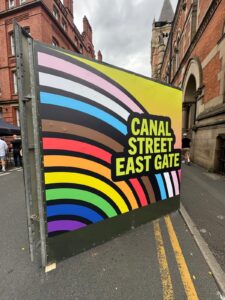
Long-range signage
captures attention from across the venue. These are your hanging banners, large-format directional signs, and entrance archways. They work at 30+ metres, pulling people toward key areas. Think of them as the first handshake – bold, visible, unmistakable.
Medium-range signage
guides movement once people are closer. These signs sit at eye level, positioned at decision points – corridor junctions, stairwell entrances, registration desks. They answer the question: ‘which way now?’
Short-range signage
provides detailed information once attendees reach their destination. Room numbers, session details, sponsor acknowledgements, safety information. This is where precision matters most.
“Wayfinding isn’t optional: it’s fundamental to event safety and satisfaction. When people know exactly where they are and how to get where they’re going, everything else works better. The signage needs to be intuitive enough that attendees don’t even think about it,” says Mat Jephcott, Group Operations Director at Hollywood Monster.
Material Matters: Indoor vs Outdoor Events
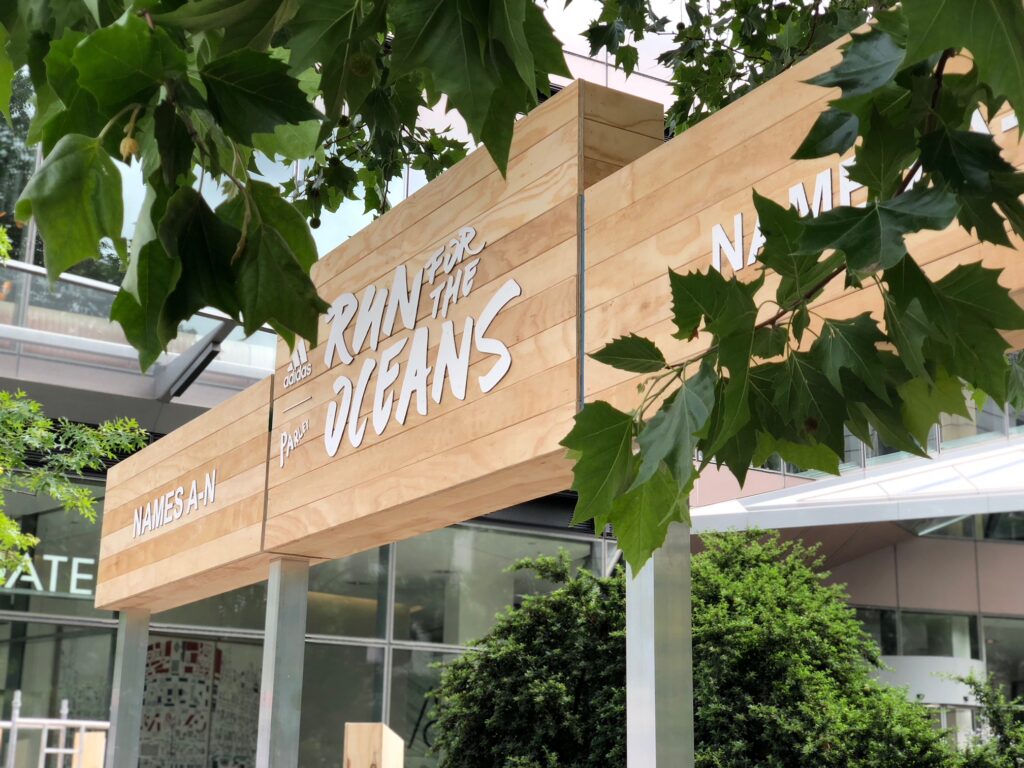
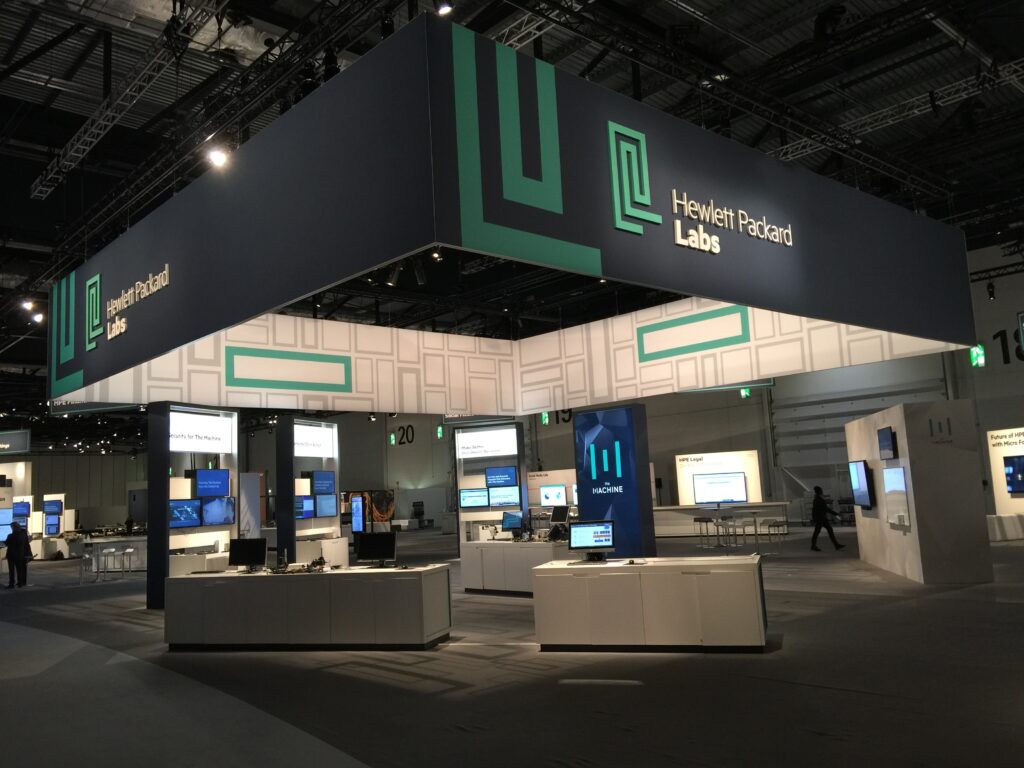
A polished corporate conference in a London hotel needs completely different signage than a three-day music festival in a muddy field. The principles stay the same, but materials have to match conditions.
Indoor events call for clean, professional finishes. Rigid substrates, mounted displays, fabric banners that won’t wrinkle. Everything needs to look sharp under artificial lighting and withstand constant handling during setup.
Outdoor events demand weather-resistant materials that can handle whatever British weather throws at them. Mesh banners for wind resistance, weatherproof vinyl for longevity, secure mounting systems that won’t fail when conditions get rough. And precision cutting ensures every panel aligns properly even when installation happens in less-than-ideal circumstances.
Hollywood Monster’s 5-metre Hasler Magna conveyor cutter handles both scenarios with equal precision. Whether you’re producing intricate die-cut shapes for an indoor gala or large-format directional signs for a festival site, the same exacting standards apply. Every edge aligns. Every panel fits. Every installation goes smoothly.
The Production Solution
Maintaining consistency at scale requires end-to-end production control. Hollywood Monster’s integrated workflow connects high-performance printing systems directly with precision cutting technology. SwissQprint and EFI VUTEk printers establish colour accuracy across substrates. The Hasler Magna conveyor cutter maintains dimensional precision whether you’re producing 10 pieces or 1,000.
Everything flows through a single calibrated environment. Same colour profiles. Same cutting tolerances. Same quality standards from first piece to last. When you’re producing signage for a week-long event, this consistency isn’t a luxury – it’s what prevents installation from becoming crisis management.
National Rollouts: Consistency Across Cities
Product launches, roadshow tours, franchise conferences – these events demand identical signage across multiple locations. Your brand launches simultaneously in London, Manchester, Edinburgh, and Birmingham. How do you guarantee everything looks the same?
The traditional approach involves coordinating with local suppliers in each city. Different printers. Different materials. Different quality standards. The result? Signage that’s recognisably your brand but frustratingly inconsistent in execution. London gets sharp, vibrant graphics. Manchester’s colours look washed out. Edinburgh’s panels don’t quite align.
Multi-Day Events: The Consistency Challenge
A three-day conference produces hundreds of individual signage pieces. Directional signs. Stage backdrops. Registration banners. Sponsor boards. Session room markers. All of which need to maintain exact brand consistency from day one through teardown.
The challenge multiplies when you’re working across multiple venues. That pharmaceutical company conference with morning sessions at the convention centre, afternoon workshops at a nearby hotel, and evening receptions at a third location?
Every venue needs coordinated signage that maintains identical brand standards.
Where ‘Close Enough’ Falls Apart
Colour consistency presents the first major hurdle. Different materials handle ink differently. Vinyl, fabric, and rigid substrates each have unique absorption properties. Without calibrated printing systems and proper colour management, your corporate blue shifts between pieces. Sponsors notice. Attendees notice. Your brand team definitely notices.
Dimensional accuracy creates the second challenge. When multi-panel installations don’t align precisely, you get visible gaps, overlapping edges, or graphics that simply won’t fit the mounting structure. Installation teams lose hours trying to force pieces together that should have aligned perfectly from production.
6. The Technical Edge: Why Material Choice Matters
The British weather is the greatest enemy of outdoor festival signage. From 30-degree heatwaves to sudden Atlantic squalls, your signage needs to be extremely durable.
Banners
Use heavy-duty, reinforced hems and eyelets.
Mesh
For high-altitude or wind-exposed areas, mesh allows air to flow through without compromising the vibrancy of the print.
Vinyl
Select specific adhesives based on the surface – whether it’s wood, metal, or plastic – ensuring no peeling mid-festival.
Installation Time Multiplies
Panels that don’t align require field corrections. Your installation team spends hours measuring, adjusting, trimming, and jury-rigging fixes for problems that shouldn’t exist. Every hour of overtime costs real money. Every delay pushes other setup tasks back. The stress compounds.
Professional production eliminates these variables. Precision-cut mounting holes align perfectly. Panel dimensions match specifications exactly. Multi-piece installations go together smoothly because everything was designed to fit from the start.
Coordinated Delivery and Logistics
Managing deliveries from multiple suppliers means coordinating different schedules, tracking separate shipments, and hoping everything arrives when needed. Inevitably, something arrives early and needs storage, or late and creates installation stress.
Single-source suppliers coordinate complete deliveries timed to your installation schedule. Everything arrives together, properly packaged, with installation proceeding logically without waiting for missing elements.
“Multi-day events amplify every small inconsistency. A colour shift you might not notice on a single banner becomes glaringly obvious when you have the same graphic repeated across 20 directional signs,” explains Mat Jephcott, Group Operations Director at Hollywood Monster.
In Summary
Precision production delivers ROI through multiple channels: faster installation, eliminated reprints, consistent brand presentation, satisfied sponsors, and long-term reusability. The impact compounds across multi-day events and national rollouts where consistency at scale becomes essential.
‘Good enough’ signage costs more than professional production when you account for installation delays, crisis management, damaged sponsor relationships, and the stress of wondering whether everything will actually work on event day.
Hollywood Monster’s integrated production workflow – combining high-performance printing systems with the Hasler Magna’s precision cutting technology – delivers the consistency that makes large-scale events run smoothly. Every panel aligns. Every colour matches. Every installation proceeds as planned.
In an industry where margins are tight and stakes are high, precision production isn’t a premium option. It’s the baseline for events that work as intended from first day through teardown.
For event signage that goes beyond the ordinary
For event signage that turn heads, stops scrolls, and gets people talking, come to Hollywood Monster. We’ll push your brand from bold to unforgettable, with a little craft, a little creativity, and just enough mischief.
READ MORE
Meet Dave Cowen: Thirty Years in Print and Still Asking the Right Questions
Skyline to Stage: The Ultimate Guide to Outdoor Festival Signage & Concert Branding
Hollywood Monster Strengthens Commercial Team with Industry Veteran Dave Cowen
Refresh & Rotate
Just because your campaign is live doesn’t mean it should stay static. Rotating and refreshing content keeps shoppers curious and encourages repeat visits.
Tips for December:
- Update digital messaging and countdown screens regularly.
- Swap promotional signage to highlight new offers or events.
- Replace any worn or damaged graphics to maintain a premium look.
A campaign that evolves during December will always outperform one that stays the same from start to finish.
Monitor Engagement and Adjust
December is the time to actively track performance and make small, impactful adjustments.
- Capture photos and video of installations for social media or internal comms
- Observe footfall and customer engagement to spot high-performing areas
- Use insights to tweak displays, messaging, or promotions in real time
Even minor updates can significantly increase engagement and sales during the busiest month of the year.
Maintain Operational Calm
Peak trading means extra pressure on staff and operations. Ensure your team can deliver the experience without disruption:
- Stagger restocking or maintenance to avoid blocking high-traffic areas.
- Conduct regular quality checks on signage and displays.
- Resolve any snags immediately to maintain a seamless environment.
Smooth operations make your campaign feel effortless, giving shoppers confidence and improving their experience.
Inspiration for Ongoing Impact
Think of your campaign as a living, evolving experience-always engaging, always memorable.
The campaigns that succeed in December share a few traits, and it’s important to remember these for years to come:
Immersive environments
Atrium wraps, escalator graphics, and interactive displays.
High visual impact
Neon, gloss, and tactile finishes that draw attention.
Digital flexibility
Countdown screens and dynamic promotions keep messaging fresh.
Social share-ability
Photo moments that encourage engagement online.
The Bottom Line
Your campaign is live-but it’s far from finished. Keeping it fresh, monitoring engagement, rotating content, and maintaining operational excellence is what will turn December into your most successful month of the year.
The festive season is short, busy, and competitive. Every day counts. Make the most of every moment, and your campaign will be remembered long after the decorations come down.
Get in touch to find out how Hollywood Monster can help:
READ MORE
Meet Dave Cowen: Thirty Years in Print and Still Asking the Right Questions
Skyline to Stage: The Ultimate Guide to Outdoor Festival Signage & Concert Branding
Hollywood Monster Strengthens Commercial Team with Industry Veteran Dave Cowen
That’s not a footnote. That’s engineering.
And when production partners are involved early – when they’re actually at the table during creative development – something remarkable happens. Ideas don’t just survive the journey from concept to completion. They get better.
Production as Creative Collaboration
The traditional agency workflow treats production as a sequential step. Creative happens first. Production happens after.
This made sense decades ago when print was relatively straightforward. But modern campaigns involve environmental graphics, experiential installations, multi-surface applications, specialist finishes, lighting integration, and materials that didn’t exist five years ago.
The technical complexity has changed. The workflow hasn’t caught up.
When production partners are brought in after creative is locked, they’re limited to saying yes or no. “Yes, we can print that.” “No, that material won’t work here.” They become gatekeepers rather than collaborators.
But when production expertise is available during creative development, entirely different conversations become possible:
“That concept is brilliant – have you considered this substrate that would make it backlit?”
“We could achieve that dimensional effect using layered acrylic with UV spot varnish.”
“If we rotate the installation orientation 90 degrees, we can eliminate visible seams and reduce material waste by 30%.”
These aren’t compromises. They’re enhancements. Technical knowledge doesn’t limit creativity – it multiplies it.
Real-World Example:
The Installation That Got Better
An experiential agency came to us with a concept for a brand activation space. The original design featured flat printed walls with dimensional typography mounted separately. Clean, impactful, achievable.
During our initial consultation – before artwork was finalised – we asked about the viewing distance and lighting conditions. Then we made a suggestion.
What if instead of flat walls with applied letters, we created a layered depth effect using three planes of printed acrylic at different distances?
The typography would cast subtle shadows, creating visual interest that changed as visitors moved through the space. It would make the installation feel more premium and more immersive without significantly increasing the budget.
The creative team loved it. The client loved it. The installation became one of the most photographed brand activations that quarter.
This didn’t happen because we were smarter than the agency. It happened because we were in the conversation early enough to contribute.
The agency had the creative vision. We had knowledge of materials and fabrication techniques they weren’t exposed to daily. Together, the concept evolved into something neither of us would have developed separately.
That’s what collaboration looks like.
The Technical Knowledge Gap
Creative agencies are exceptional at brand strategy, visual communication, and conceptual thinking. That’s their expertise. That’s what clients hire them for.
But agencies can’t be expected to know the technical specifications of every substrate, the curing properties of different inks, the structural limitations of various fixing systems, or how different materials behave in different environmental conditions.
And they shouldn’t have to.
Just like production partners aren’t expected to understand brand positioning, audience psychology, or creative strategy. That’s not our lane.
The magic happens when both types of expertise are available when decisions are being made.
The Three Zones of Event Signage
Long-range signage
captures attention from across the venue. These are your hanging banners, large-format directional signs, and entrance archways. They work at 30+ metres, pulling people toward key areas. Think of them as the first handshake – bold, visible, unmistakable.
Medium-range signage
guides movement once people are closer. These signs sit at eye level, positioned at decision points – corridor junctions, stairwell entrances, registration desks. They answer the question: ‘which way now?’
Short-range signage
provides detailed information once attendees reach their destination. Room numbers, session details, sponsor acknowledgements, safety information. This is where precision matters most.
Why This Matters for Client Relationships
Agencies that involve production partners early tend to have smoother client relationships. Here’s why:
More accurate proposals. When technical experts review concepts before they’re presented to clients, the scope is more accurate. Fewer surprises. Fewer revisions. Fewer “we didn’t realize that would be extra” conversations.
Faster approvals. Production partners can provide accurate renders, material samples, and technical specifications that help clients visualize the finished result. Less ambiguity means faster decision-making.
Better problem-solving. When clients request changes mid-project, agencies with strong production partnerships can assess feasibility and implications quickly. “We can do that, but it will affect the timeline like this” is more valuable than “let me check and get back to you.”
Proven capability. Clients want confidence that ambitious concepts will be delivered flawlessly. When agencies can point to production partners with relevant experience and technical capability, it strengthens the pitch.
The agency gets to focus on creative and strategy. The production partner handles technical validation. The client gets confidence that big ideas will translate into real-world impact.


The Emotional Reward of Making Things Real
Here’s something that doesn’t get talked about enough: the profound satisfaction of seeing work move from concept to physical reality.
We’ve worked with enough agencies to recognize the moment when a Creative Director sees their work at full scale for the first time. There’s a visible shift. Sometimes it’s a smile. Sometimes it’s silence. Sometimes it’s pulling out a phone to photograph it from every angle.
That moment is why people work in creative industries. Not for the pitch decks or the client presentations or the award entries. For the moment when imagination becomes tangible
Production partners get to be part of that moment.
We’re not just printing files or installing graphics. We’re helping creative people see their ideas exist in the world. We’re translating imagination into material reality. And when it’s done right – when the colours are perfect, the scale is breathtaking, and the installation is flawless – we get to share that satisfaction.
It’s why we care about getting details right. Why we obsess over colour accuracy. Why we’ll stay late to make sure an installation is perfect. Because we understand that for the agency, this isn’t just another project. It’s months of work, creative reputation, and client trust all manifesting in physical form.
We take that responsibility seriously.
Changing the Conversation
The best creative work happens when everyone involved is working toward the same goal: delivering something that makes people stop, look, and feel something.
That doesn’t happen when production is treated as an afterthought. It happens when technical expertise and creative ambition are combined from the beginning.
So here’s what we’re suggesting: bring us into the conversation earlier.
Not to constrain creativity. Not to complicate the process. But to unlock possibilities you might not have considered. To validate that ambitious concepts are achievable. To ensure creative integrity survives the journey from screen to street.
We want to make your ideas better, not just possible.
The Partnership Approach
At Hollywood Monster, we work with agencies who see production as part of the creative process, not just execution.
We’re involved in early concept discussions. We provide technical consultation before pitches. We suggest materials and approaches that enhance creative concepts. We validate feasibility so agencies can present with confidence. And we deliver with the precision and reliability that protects creative reputations.
This is how we work with the agencies who trust us most. Not as suppliers waiting for instructions, but as partners invested in creative outcomes.
Because the best work happens when creativity and capability meet early.

Recognition for the Unsung Heroes
Our “Big Ideas Deserve a Big Stage” campaign is about celebrating the creative industry – the agencies, designers, and creative teams who make brands unforgettable.
But it’s also recognition that great work doesn’t happen in isolation. It happens through collaboration between people who understand brand strategy, visual communication, and technical execution.
SUBMIT YOUR ENRTY
Submit your next project brief before 14 February 2026 and you’ll be entered to win 2 VIP Balcony tickets to a concert of your choice at Birmingham’s Utilita Arena. Win or not, we’ll provide expert consultation on your project.
Because whether you’re on stage or behind the scenes, creative work deserves celebration.
Let’s Collaborate on Your Next Big Idea
If you’re working on a campaign that needs to make real-world impact, we’d love to be part of the conversation early.
We bring technical expertise, material knowledge, and production capability that helps creative concepts become even better. And we deliver with the precision and reliability that makes agencies look brilliant.
Submit Your Brief Before 14 February 2026 and be in with the chance of winning 2 VIP Balcony tickets and get expert consultation on your project – whether you win or not.*
*Terms & Conditions Apply
READ MORE
Meet Dave Cowen: Thirty Years in Print and Still Asking the Right Questions
Skyline to Stage: The Ultimate Guide to Outdoor Festival Signage & Concert Branding
Hollywood Monster Strengthens Commercial Team with Industry Veteran Dave Cowen
