Why your point of sale signs matter more than ever
On the high street, the sale is often won or lost in the last few metres. A shopper has already walked past your fascia and through your door. What they see next, at the shelf, the counter and the till, decides whether they buy, buy more, or walk out empty-handed.
That is the job of a point of sale sign. Done well, POS signage turns browsers into buyers, lifts basket value and makes your promotions impossible to miss. Done badly, it clutters the store, confuses customers and wastes budget.
This guide covers everything a high street retailer needs to know: what a POS sign is, why it works, the main types, where to put them, how to design them so they sell, which materials to choose, and how to roll a campaign out across several stores without the headaches.

What is a point of sale sign?
A point of sale sign (or POS sign) is any printed or digital display placed where a customer makes a buying decision. That usually means near the product, at the checkout, or at the entrance to a promotional zone.
You will also hear the terms POP (point of purchase) and advertising point of sale. In practice, they mean the same thing: in-store signage that promotes a product, offer or brand at the moment someone is ready to buy.
POS signage has three core jobs:
- Inform: prices, product benefits, sizes and specs.
- Promote: offers, bundles, new ranges and seasonal campaigns.
- Guide: pulling shoppers towards key areas, the till or a feature display.
It sits alongside your wider retail signage, such as fascias, window graphics and wayfinding, but it is the part closest to the sale.
Why point of sale signs work
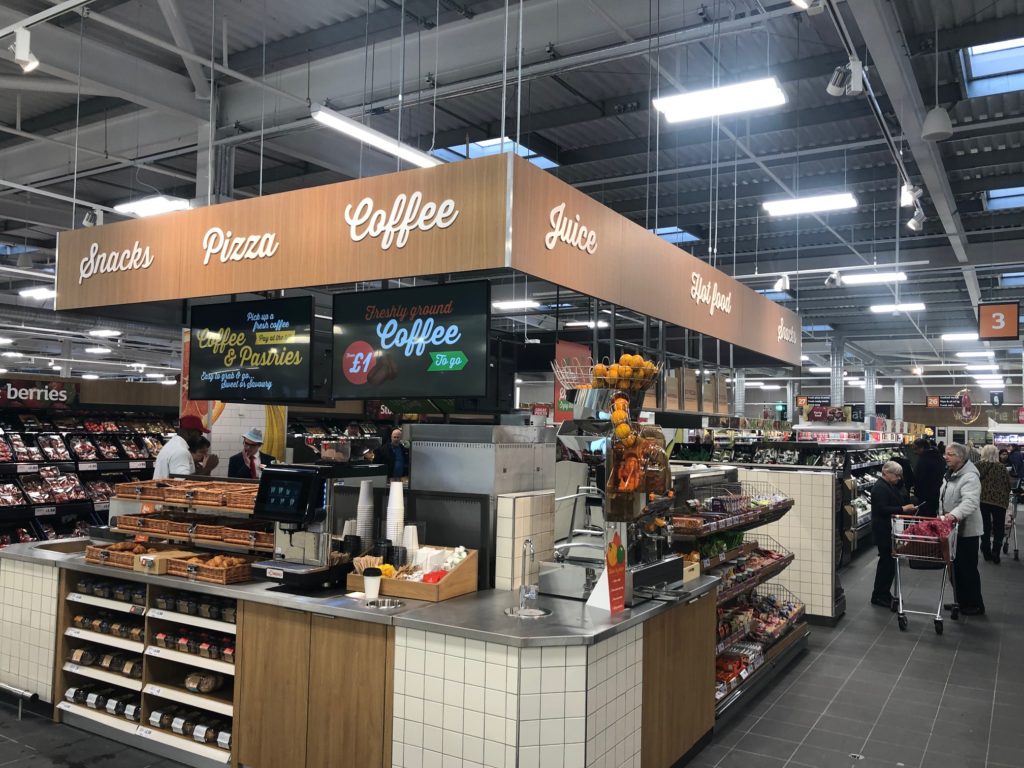
Point of sale advertising reaches people who are already in buying mode. That makes it one of the most cost-effective ways to promote a product in store.
- It captures impulse buys. Many purchases are unplanned. A well-placed POS sign nudges a shopper to add one more item right there and then.
- It costs far less than above-the-line advertising. A POS campaign puts your brand in front of customers without TV or billboard budgets. It also reinforces campaigns you already have running elsewhere.
- It goes wherever your customers are. Beyond the shop floor, the same POS thinking works for pop-up stands, A-frames at events and exhibition backdrops.
- It is easy to change. Interchangeable frames and fabric graphics let your own staff swap promotions, so you do not have to book an installer every time the campaign changes.
- It builds your brand in the space. Consistent POS signage makes a store feel like yours, even inside a shared or concession space.

Types of POS signage for high street shops
The right mix depends on your store size, footfall and what you are promoting. These are the formats we produce most often for high street retailers.
Most of these can be produced as a single printed piece or as part of a full point of sale display system. For glass, see our bespoke window graphics. For the floor, see our bespoke floor graphics. If your offers change weekly, digital posters can save on reprints.
Shelf wobblers and strips
Best for flagging offers and new lines on the shelf edge, at eye level
Counter and countertop displays
Best for impulse buys and add-ons beside the till
Freestanding display units (FSDUs)
Best for product launches and promotions at the end of an aisle or front of the store
Floor graphics
Best for guiding shoppers and promoting nearby ranges on walkways and in queue areas
Window graphics and posters
Stopping passers-by and headline offers on shop windows and doors
Hanging banners and ceiling danglers
Best for zoning the store and seasonal campaigns above key sections
A-boards and pavement signs
Best for driving footfall from the street, positioned outside the entrance
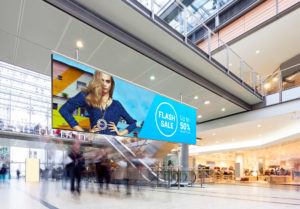
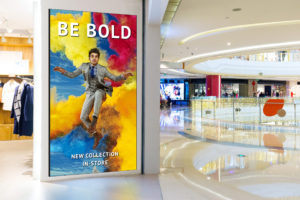
Digital posters and screens
Best for rotating offers, videos, and frequent price changes across windows, entrances, and feature walls


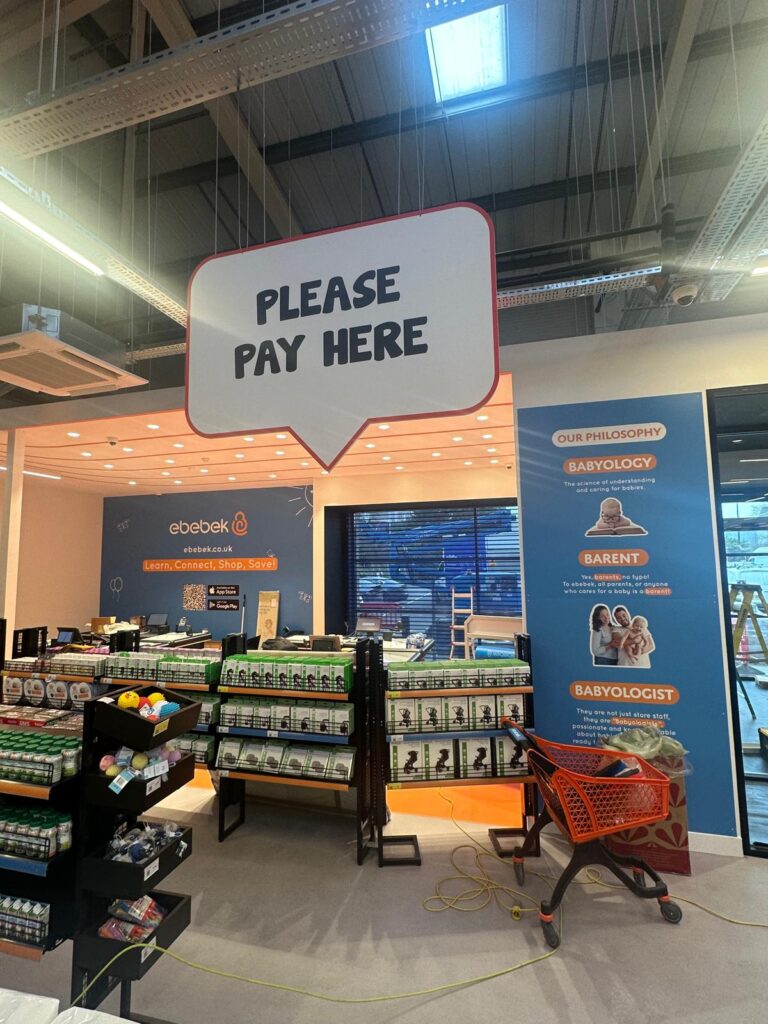
Where to put POS signs in a high street store
Placement matters as much as design. Follow the customer’s journey and give each zone one clear job.
- The window. Your first chance to stop someone walking past. Keep it to one headline message that reads from across the pavement. Our window displays and dressings team plans these as part of wider campaigns.
- The threshold. Shoppers need a few steps to adjust once inside, so signs right by the door are easily missed. Place your first POS sign a little further in.
- The feature zone. Front-of-store tables, end caps and FSDUs are where launches and hero offers live. This is your highest-value space.
- The shelf. Wobblers, shelf strips and price tickets do the detailed selling: price, benefits and “why this one”.
- The queue and till. Customers are standing still with time to read. Counter displays and floor graphics here are ideal for add-ons and impulse buys.
In a small unit, less is more. Pick two or three zones and do them well rather than covering every surface.
Designing point of sale signs that sell
A shopper gives a POS sign a glance, not a read. Design for that glance.
- One message per sign. If a sign tries to say three things, it says nothing. Lead with the offer or the benefit.
- Make it readable at distance. Large, bold type with strong contrast. As a rule of thumb, the further away the viewer, the bigger and simpler the text.
- Put the price or offer first. “2 for £10” beats a paragraph of product copy every time.
- Stay on brand. Consistent fonts, colours and tone make your store feel considered, not cluttered. They also make campaigns quicker to produce.
- Use a clear call to action. “Try it today”, “Ask in store” or “Scan for sizes” gives the shopper a next step.
- Refresh regularly. Signs that stay up for months become invisible. Plan for seasonal and campaign changes. Fabric graphics can be rolled up and posted to stores, so staff can swap them in minutes.
Before sending files to print, check our artwork guidelines so colours, bleed and resolution come out exactly as intended.

Choosing materials and rolling out your POS signs
The right material depends on how long a sign needs to last and how much handling it will get:
- Paper and card: short promotions and price changes, lasting days to weeks.
- Corrugated board: FSDUs, counter units and launch displays.
- Foamex and rigid board: hanging signs, wall panels and A-boards, lasting months.
- Self-adhesive vinyl: window, floor and wall graphics, from short promotions to long-term fixtures.
- Fabric: backlit panels, tension fabric displays and reusable frames.
- Acrylic: premium counter signs and permanent fixtures.
Sustainability matters to shoppers and brands alike. Our Kavalan and UFabrik ranges are PVC-free, recyclable and reusable alternatives to traditional PVC banners. Explore our range of sustainable signage, or request a sample pack.

Whether you have one shop or fifty, a few habits avoid the most common POS mistakes:
- Survey before you print. Measure every window, shelf and fixture so nothing arrives the wrong size.
- Keep every store on brand. Centralised production and store kits labelled by zone stop branches looking different.
- Launch together, take down on time. Set one go-live date, and diarise takedowns so no store shows an expired offer.
- Replace tired graphics. Curled corners and faded posters make the whole store look neglected.
- Check the rules outside. Pavement A-boards and some illuminated signs may need council consent. See our guide to signage planning permission.
Hollywood Monster manages national point of sale print campaigns from survey to installation, including campaign and branding rollouts and store launches.
Kickstart Your POS with Hollywood Monster
From a single counter display to a nationwide campaign, Hollywood Monster designs, prints and installs point of sale signs that get noticed and drive sales. We have been producing large-format print and signage for over 30 years, all from our UK facility.
Explore our high street retail signage work, browse our work, or contact our team to talk through your next POS campaign.
Frequently Asked Questions
What does POS stand for in signage?
POS stands for point of sale. A POS sign is any display placed where customers decide to buy, such as at the shelf, counter or till.
What is the difference between POS and POP?
POP means point of purchase. The terms are used interchangeably in UK retail, though some people use POP for displays anywhere in store and POS for signs at the till.
What is advertising point of sale?
Advertising point of sale is in-store signage that promotes a product, brand or offer at the moment of purchase. Examples include shelf wobblers, FSDUs, window posters and digital screens.
How long does POS signage last?
It depends on the material. Paper and card suit short promotions of a few weeks. Rigid board, vinyl and fabric last months. Acrylic and fabricated signs can be permanent.
Do I need permission for POS signs outside my shop?
Signs inside your store generally do not need consent. Pavement A-boards and some external or illuminated signs may need permission from your local council, so check before installing.
