
Retail shop signage takes more physical punishment than almost any other signage category – constant handling, weekly promotion changes, and mixed environments spanning fascia, POS, windows and floors. The right materials (ACM and built-up letters for fascia, Foamex or acrylic for POS, printed vinyl for windows, anti-slip substrates for floors) determine whether signage still performs six months into a campaign or needs replacing after two. Material specification, not creative design, is usually where underperforming pos signs and pos signage actually go wrong.
Retail shop signage has one job: get noticed, get remembered, and keep working under conditions that would wear out almost anything else. Busy aisles, constant handling, seasonal promotions swapped every few weeks, doors opening onto the weather all day – retail signage sees more wear and tear than almost any other signage category, and the wrong material shows it fast.
Get the material right, and signage does its job successfully, for years. Get it wrong, and you’re looking at faded POS displays within a season, scuffed floor graphics within weeks, or wayfinding signs that looked sharp on day one and tired by month three.
Why Materials Matter More in Retail Than Almost Anywhere Else
Retail environments are uniquely hard on signage: high footfall means constant contact, especially for POS displays and floor graphics; promotions turn over weekly, so materials need to be quick to produce and swap without looking like a stopgap; and one rollout might span an exterior fascia, an interior POS unit and a floor decal – three completely different material demands under one project. For multi-site retailers, a wrong material choice doesn’t just fail once – it fails identically across every location, at the same time.
According to consumer research from FedEx Office, 68% of consumers believe that a business’s signage directly reflects the quality of its products or services. This shows that getting retail shop signage materials right isn’t a finishing detail – it’s the difference between signage that performs for its full campaign lifetime and signage that lets your brand down halfway through it. It’s a principle that runs through our entire retail signage approach, regardless of format.

Fascia & Shopfront Materials: First Impressions That Have to Last
Your shop fascia works harder than any other sign in the building – it’s outdoors, permanent, and the very first thing a customer sees before they’ve walked in. In fact, national consumer studies show that 76% of shoppers have entered a store they had never visited before based solely on the visual appeal of its exterior signage.
For external retail signage, Aluminium Composite Material (ACM) is the standard for a reason: lightweight, weather-resistant, and capable of holding a crisp finish for years outdoors. For 3D presence, built-up lettering turns a flat fascia into something with genuine shopfront presence. See our shop signs and fascia work, and how this plays out for high street retail signage specifically, where a fascia often has seconds, not minutes, to earn a passerby’s attention.

Sustainable Materials, Without the Compromise
Retail signage’s constant turnover makes material waste a real problem if it’s not addressed at the material stage. PVC-free (Kavalan, UFabrik) and recyclable PVC optionsk now deliver the same durability retailers expect, without the same landfill footprint every time a campaign changes over.
Our eco-friendly signage range covers the sustainable alternatives available across fascia, POS, window and floor applications alike – because powerful signage doesn’t need to come with a hefty environmental cost.
POS Signage Materials: Built for Speed and Swapped Often
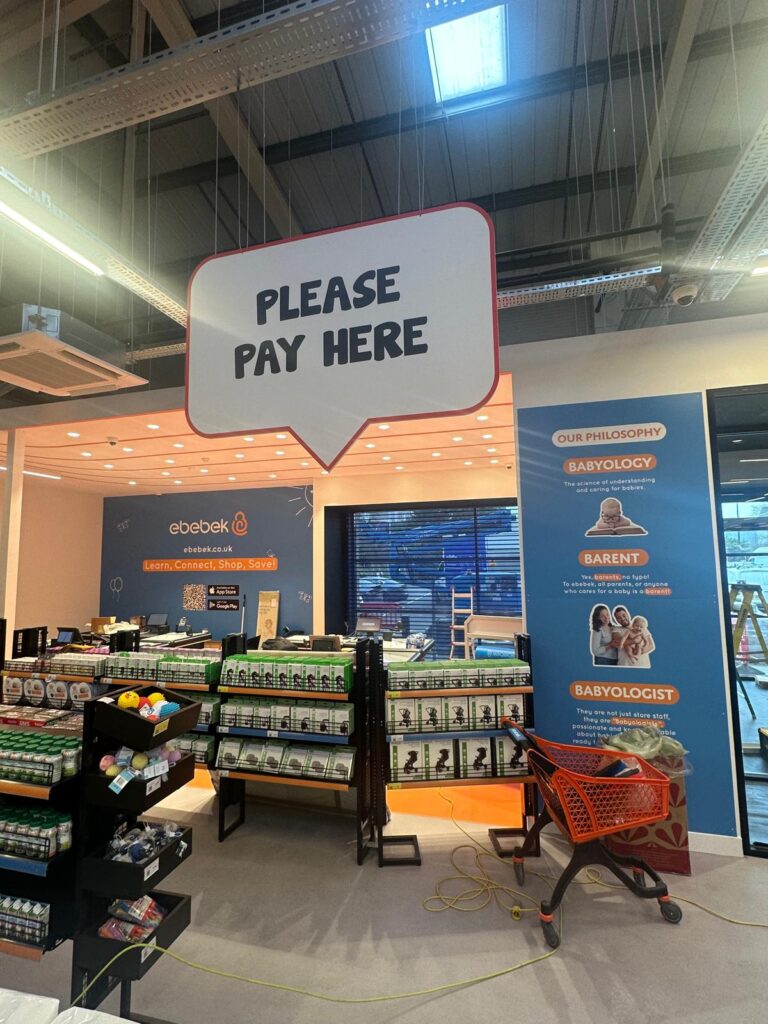
Point-of-sale display signage lives a harder life than almost anything else in-store. It’s touched constantly, moved between displays, and often expected to last one campaign before replacement – so the material has to balance durability with fast, cost-effective production. With research revealing that up to 82% of buying decisions are made in-store and nearly 1 in 6 brand purchases are driven directly by the presence of an in-store display, high-performing POS materials are critical to capturing point-of-purchase volume.
Foamex remains the workhorse of POS signs: rigid enough to stand freely or slot into a display unit, light enough to move easily, and cost-effective enough to refresh regularly. Acrylic steps in where a premium finish matters more than turnaround speed – till points, premium counters, anywhere a shopper handles the display up close. For POS signage that updates without a reprint at all, digital posters increasingly replace the reprint cycle for retailers running frequent price or promotion changes.
Window & Floor Graphics: Materials That Take Direct Contact
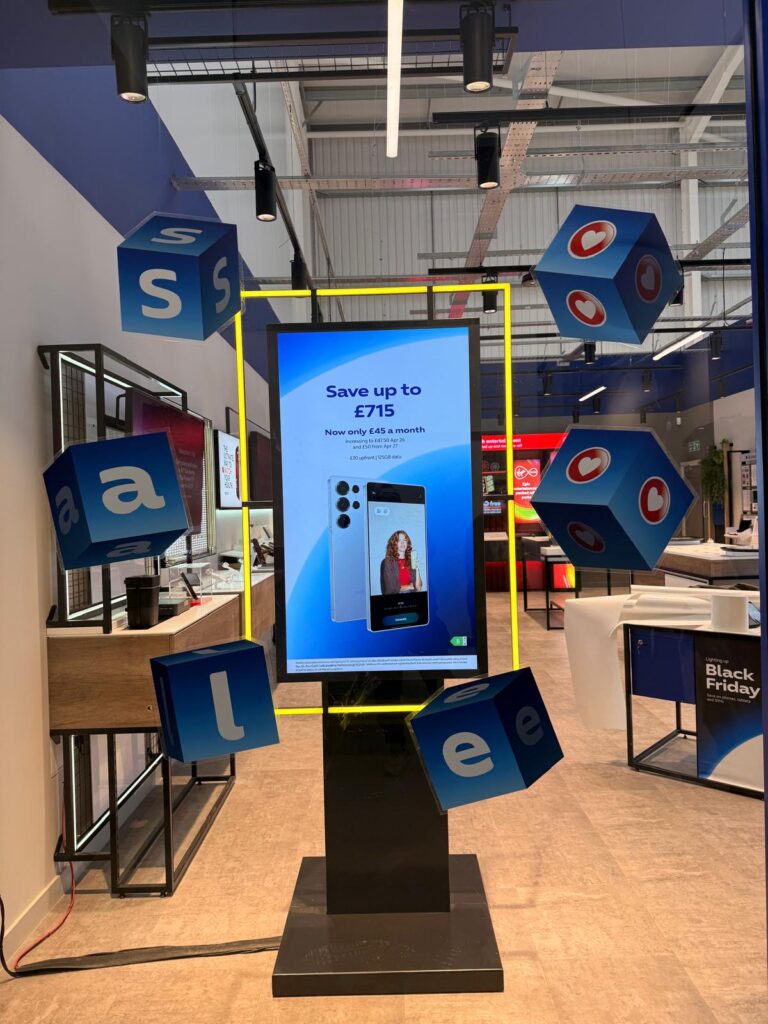
Window and floor signage can get worn very easily thanks to the fading power of the sun and thousands of footsteps each day – as such, the wrong material becomes visible fast. Yet the potential for sales as a result of floor and window vinyl is immense: consumer research from Inmar Intelligence shows that 69% of shoppers recall noticing in-store promotions and floor media, which directly leads to extra browsing and unplanned purchases.
Printed vinyl signage remains the standard for window graphics – flexible enough to wrap glazing seamlessly, vibrant enough to stop a passerby, and repositionable enough to update for a new campaign without damaging the glass. Floor graphics need a different specification entirely: anti-slip laminates and hardwearing vinyl that survive foot traffic, trolley wheels and cleaning chemicals without lifting or fading within weeks.
Materials Shift Depending on Format
The right retail shop signage material isn’t fixed – it shifts depending on where the store sits, because the demands on the material change even when the signage type doesn’t.
High street retail locations put the most weight on fascia and window materials, since that’s what a passerby sees first at close range. Retail parks shift the emphasis toward large-format, distance-legible materials – signage read from a car park, not a pavement, needs a different spec entirely. Supermarkets demand heavier-duty POS and wayfinding materials that can survive genuinely constant daily footfall. Shopping centres add a further consideration: materials need to hold up visually next to dozens of other retailers’ signage in the same space, not just in isolation.
The material decision is what determines whether retail shop signage still looks sharp in month six of a campaign, or needs replacing by month two – regardless of format.
Get the Materials Right, and the Signage Takes Care of Itself
Retail signage rarely fails because of bad design – it fails because of the wrong material for the job. A fascia that fades, a POS display that curls at the edges, a floor graphic that peels within a fortnight: none of that is a creative problem. It’s a specification problem, solved before a single design file is opened.
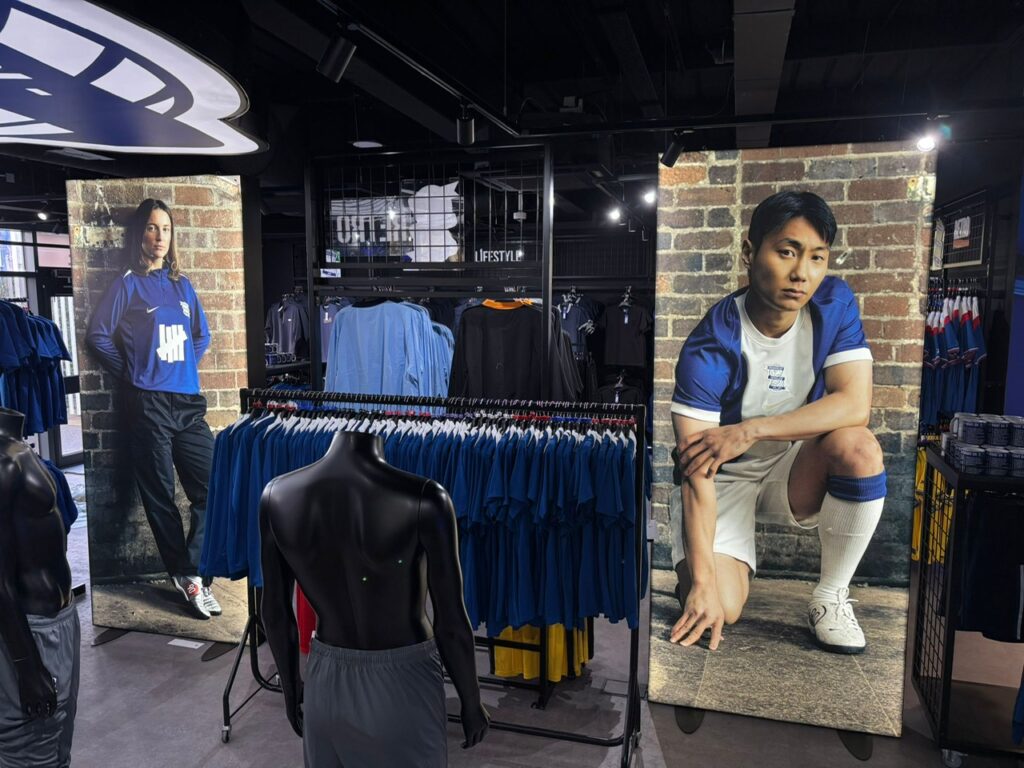
At Hollywood Monster, we build retail shop signage that is matched precisely to where it’s going and how hard it needs to work – fascia to floor, POS to window, high street to shopping centre. Explore our full retail signage range to see how it comes together across a full store environment.
Let’s Talk Signage
Ready to fix the materials before your next campaign exposes them? Book a free consultation with our team.
Explore More


Building Advertising Wraps: Everything You Need to Know

Frequently Asked Questions
Why does my retail signage keep fading or wearing out quickly?
This is usually a material specification issue rather than a design problem. Signage exposed to direct sunlight, high foot traffic, or frequent handling needs weather-resistant, hard-wearing materials – using a lower-grade material for a high-contact application is the most common cause of early wear.
What materials are used for POS signs and POS signage?
POS signs are most commonly produced using Foamex for cost-effective, frequently swapped displays, or acrylic where a premium, longer-lasting finish is needed. Digital posters are increasingly used for POS signage that needs to update without reprinting at all.
What’s the difference between signage for retail stores and general signage?
Signage for retail stores typically needs to withstand far higher footfall, more frequent handling, and more regular campaign turnover than signage in lower-traffic environments, which is why material durability and quick-swap production matter more in retail than in most other sectors.
